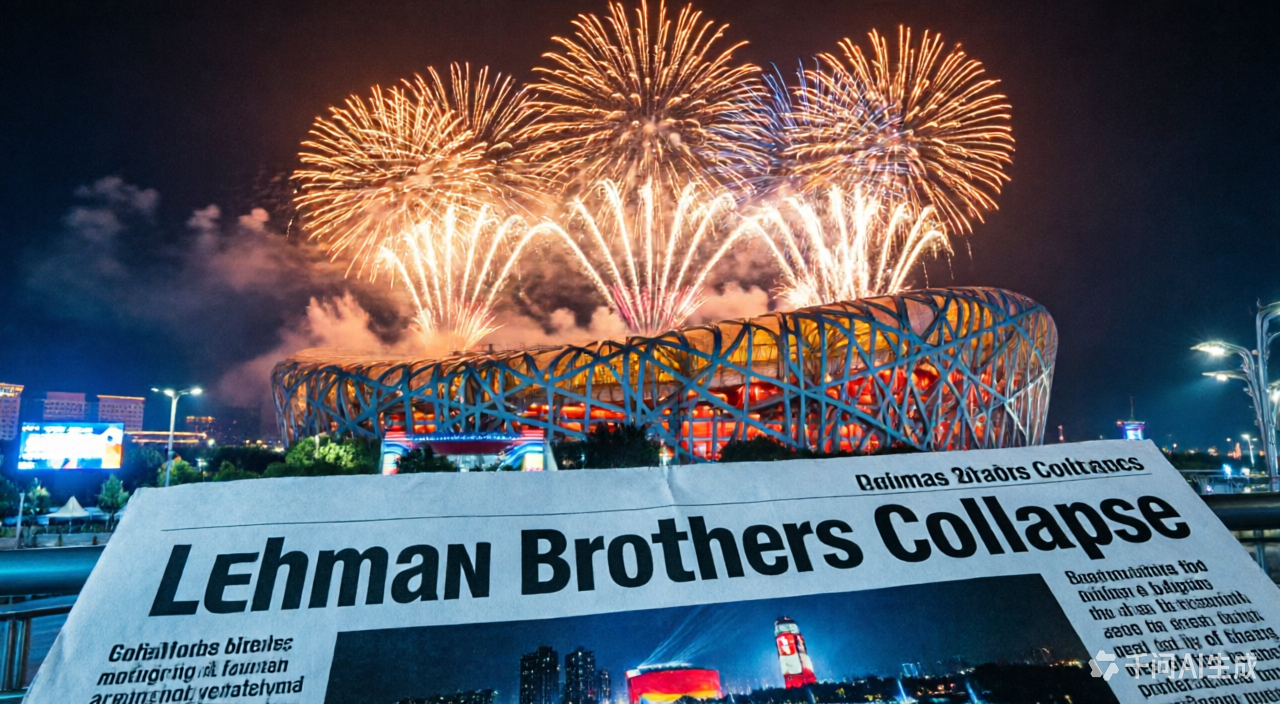
Three Choices, Three Destinies
The first person put the money in the bank. 15 years later, NT$500K became NT$700K. He was satisfied — the money didn’t shrink. But walking out of the bank, he realized: 15 years ago, NT$500K could cover a house down payment. Now NT$700K barely buys a bathroom.
The second person rushed into the stock market. The A-shares had fallen from 6,124 points, and “golden pits” were everywhere. He thought he was the chosen one to catch the bottom. The result? Lucky ones turned NT$500K into NT$2 million. Unlucky ones who bought PetroChina turned NT$500K into NT$300K. Most tossed and turned through the volatility and eventually cut their losses.
The third person bought a house. In Beijing, NT$500K was the down payment on a NT$1 million property. 15 years later, it was worth NT$5 million. He did nothing and his money multiplied fivefold.
But here’s something a thousand times more painful: in 2008, countless people actually had NT$500K in hand, yet did nothing. Not because they didn’t want to — they simply didn’t know what to do. They watched the news, listened to experts, and every option seemed both reasonable and risky. In the end, they watched the tide of the era roar past without catching a single wave.
Why can some people always see through the fog and hit the right notes, while most of us only realize what we missed in hindsight?
The answer lies in a story.
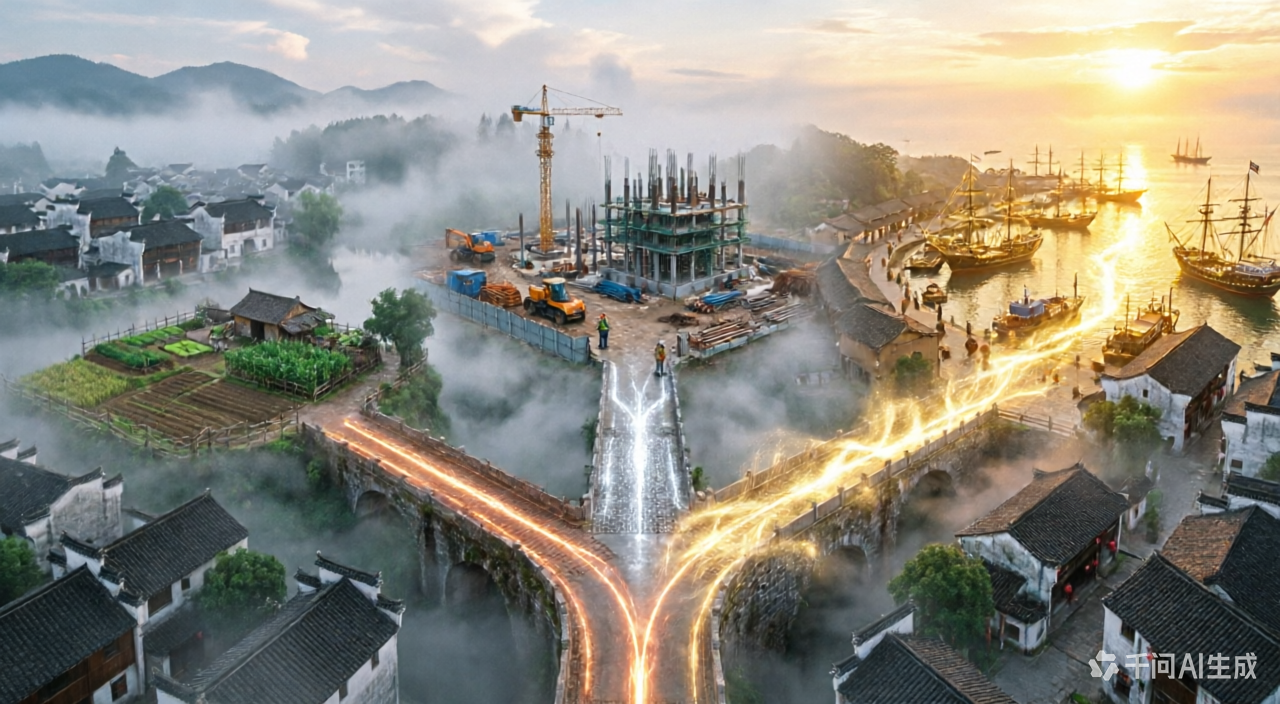
Three Brothers and the Dock
Once upon a time in a small village, there were three brothers: Da-Zhuang (the eldest), Er-Ming (the second), and San-Si (the third). Each had saved 50 jin of grain — their entire life savings, their hope for marriage and a house.
One day, a merchant came to the village. He planned to build a large dock by the river — all commercial ships traveling north and south would stop here. He needed workers, paying three jin of grain per day.
The news exploded through the village. All three brothers heard it, but their reactions were completely different.
Da-Zhuang: “None of my business”
Da-Zhuang went home and continued polishing his hoe. His wife asked if he’d check it out. He said: “Building a dock has nothing to do with me. I can’t sail or build. What if it’s a scam? Farming is reliable — plant seeds and you get a harvest.”
The next day, sun rose as usual, and Da-Zhuang went to the fields with his hoe.
Er-Ming: “What can I do?”
Er-Ming couldn’t sleep that night, tossing and turning on his bed doing the math — farming earns one jin per day, the dock pays three jin. Three beats one. Anyone can do that math. Tomorrow he’d go.
The next day he ran to the river and hauled stones and timber with all his strength, sweating profusely. But every evening, carrying his heavy three jin of grain home, he felt secure. He believed he’d seized the opportunity.
San-Si: “What will the future look like?”
San-Si also couldn’t sleep that night. But he wasn’t thinking about daily earnings. He lit an oil lamp and stared at the merchant’s dock blueprint for the entire night.
He was thinking: Why is this dock being built here? How many ships will dock daily once it’s complete? How much can the merchant charge per ship? Once this dock is built, isn’t it just like the village mill — as long as the river flows, it keeps making money?
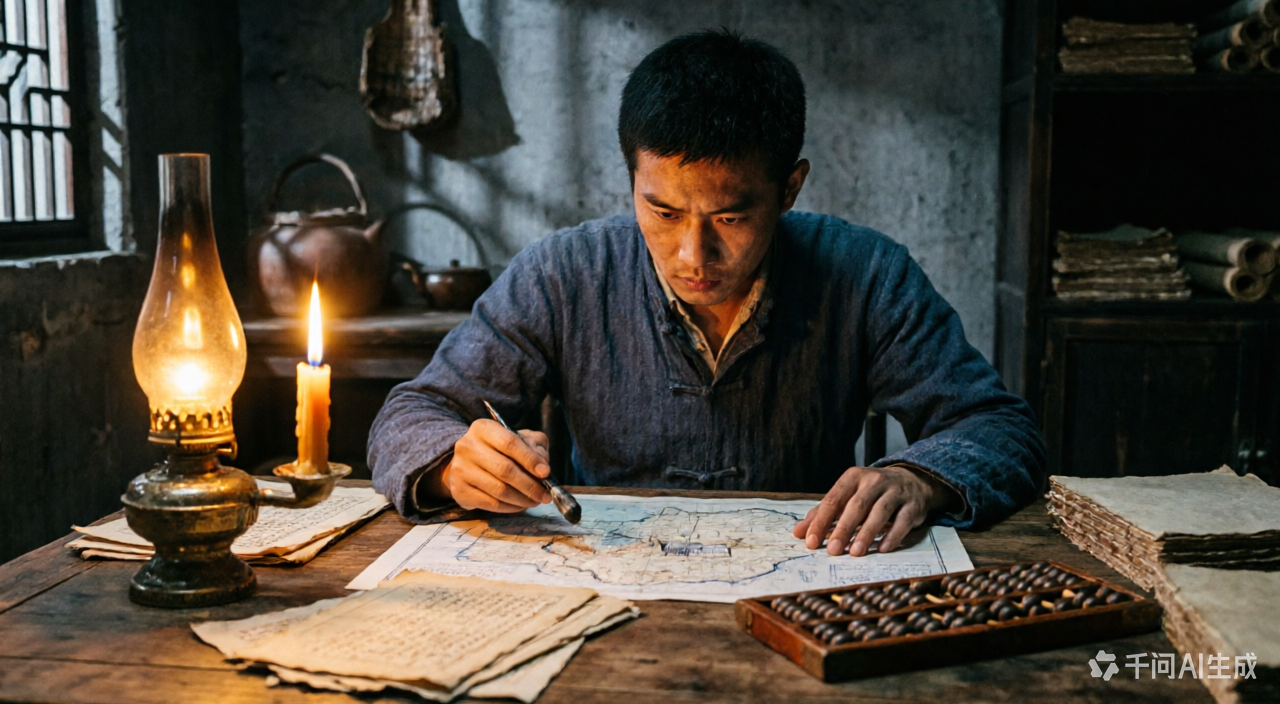
The more he thought, the more excited he became. He realized this wasn’t a “find a job” opportunity — this was a machine that would continuously produce grain forever.
Before dawn the next day, San-Si made a decision that stunned the entire village: he packed all 50 jin of grain into a burlap sack and carried it straight to the merchant.
The merchant assumed he was looking for work and was about to wave him off. San-Si spoke:
“Boss, I’m not here to work. This is my entire life savings — 50 jin of grain, it’s yours. I don’t want wages. I only ask one thing: let me invest in the dock. After it’s built, just give me a small share of the profits.”
The merchant froze. For the first time, he carefully studied the young man before him. In this remote village, someone actually understood the essence of his business.
He smiled and nodded.
Three Years Later: Three Completely Different Lives
The dock was built. Ships came and went, trade flourished. The three brothers’ fates diverged in three completely different directions.
Da-Zhuang was still farming. Good weather meant decent harvests; bad weather meant tightening the belt. His life was identical to three years ago.
Er-Ming became the dock’s star laborer, earning five jin per day. He built a new house and got married — the envy of the village. But he knew: the day he couldn’t work anymore, the income would stop.
San-Si? He didn’t do any physical labor. Each month he did one thing: collected his dividend from the dock’s accounting office. The grain he received exceeded what Da-Zhuang grew in an entire year. He used it to open a small tavern by the dock, serving ship crews, making even more money.
He became the first person in the village to truly break free from trading time and labor for money.
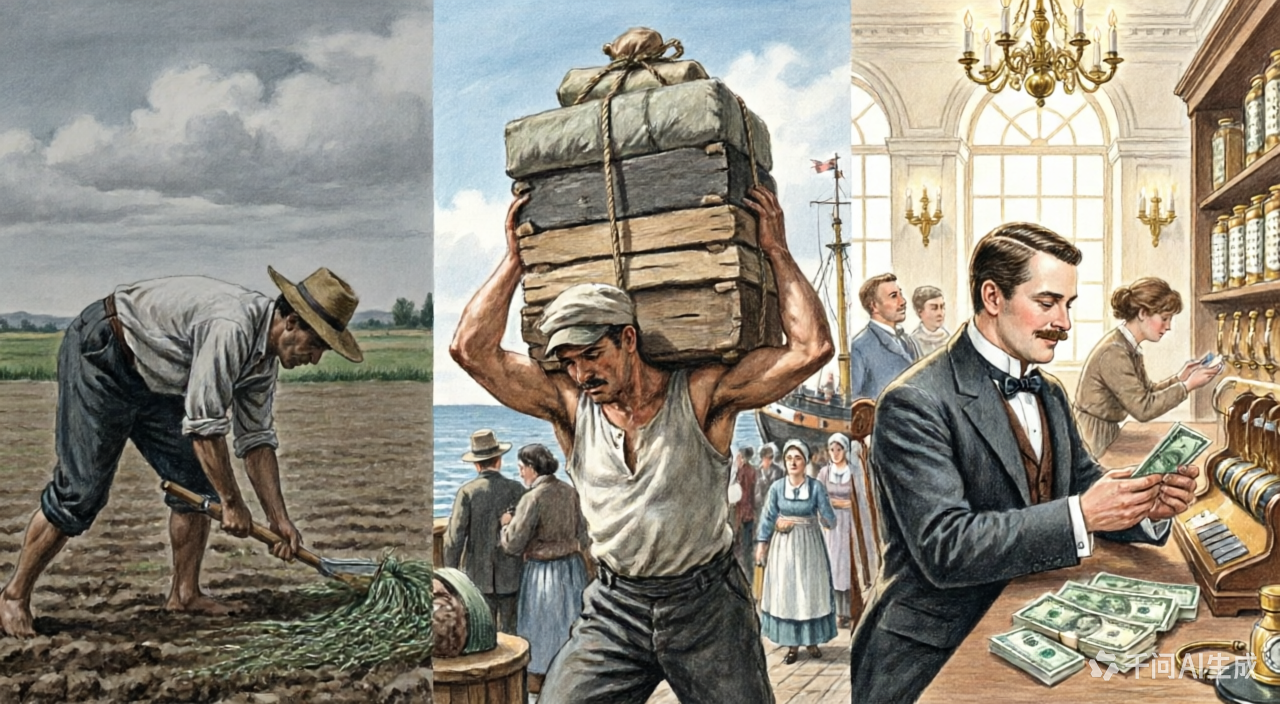
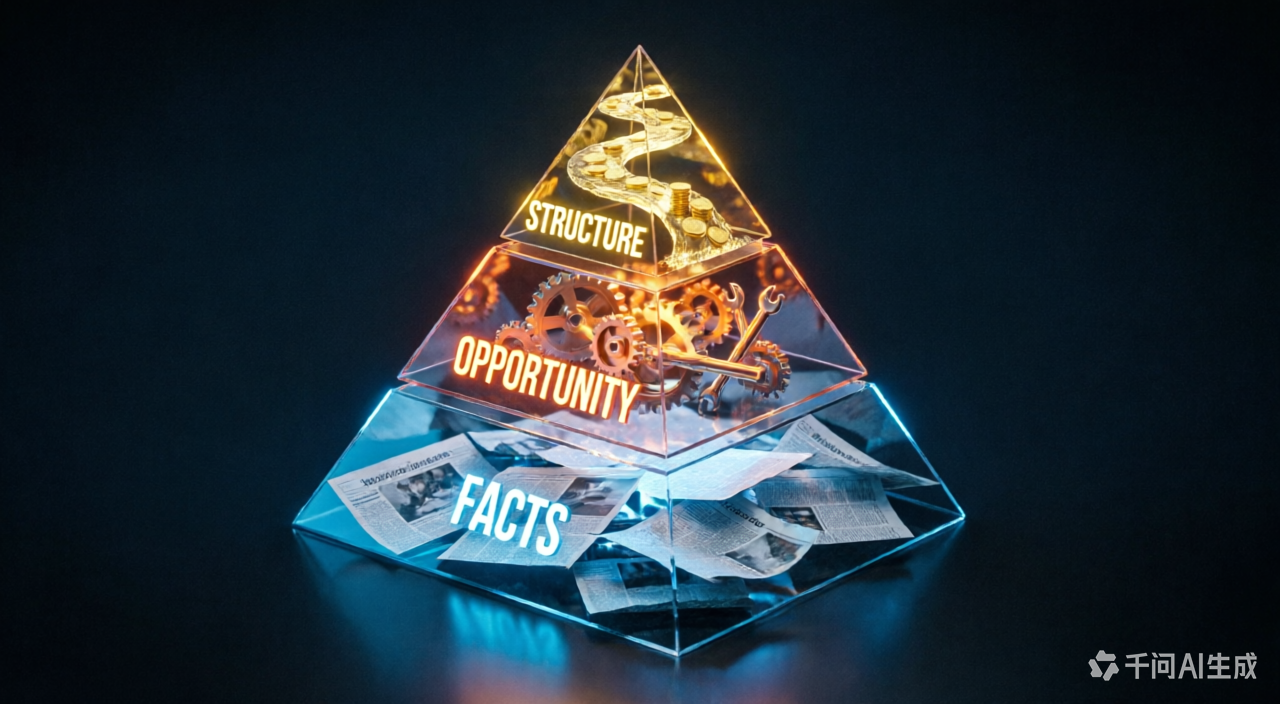
Three Levels of Information Advantage
The story is over. Same news, same starting point — why did the three brothers’ fates diverge so drastically?
Because they saw the world through different eyes.
The village is our society, the merchant’s news is the information we encounter daily, and the three brothers represent three types of people facing information.
Level 1: The Fact Layer (Da-Zhuang)
What did Da-Zhuang see? A fact — a merchant wants to build a dock by the river. Okay, noted. And then? Nothing.
This fact was no different to him than hearing “the US raised interest rates again” or “a company released a new phone.” His brain automatically labels it: “Not my problem.”
This is the state of the vast majority. We’re spectators of information, bystanders of the era. News seen and forgotten, never thinking about the chains hidden behind these changes.
Level 2: The Opportunity Layer (Er-Ming)
Er-Ming went one step further. He saw the opportunity behind the fact: building a dock needs laborers, my strength can be used, working there earns more grain. He found the connection between “change” and “himself” and acted quickly.
This thinking already surpasses 90% of people. In the workplace, they’re the proactive employees who learn new skills and grab project opportunities.
But Er-Ming’s limitation: he caught a “point opportunity.” These opportunities have low barriers — you can see them, others can too. You go haul bricks today, 100 people show up tomorrow. When too many join, the opportunity shifts from dividend to rat race. You’re still earning hard labor money with a ceiling and low risk resistance.
Level 3: The Structural Layer (San-Si)
San-Si saw the deepest layer — structure.
He didn’t ask “what can I do for the dock” but “what IS the dock.” He saw its essence: an asset that continuously generates cash flow. Once this structure connecting north-south water transport is established, wealth flows to its owner like a river.
So he didn’t want to work inside this structure — he wanted to become part of it, even the smallest part. With 50 jin of grain, he completed a stunning exchange: past labor for future revenue rights. From then on, as long as the dock operated, thousands of people created value for him.
How Can Ordinary People Break Through? Three Ideas to Start Today
You might ask: I’m just an ordinary person, no connections, no background — how am I supposed to see those structures?
Good question. These three methods need zero resources and can start today.
Idea 1: Walk One Level Up Along the Information Chain
When you see a news item, force yourself to stop and ask three “then what?” questions.
Take “the government is promoting mandatory waste sorting”:
Da-Zhuang thinking: “Oh, now I have to sort wet and dry trash. Annoying.”
Er-Ming thinking: “Waste sorting means different bins — selling bins should be good business. I’ll open an online store.”
San-Si thinking:
- Then what? Waste sorting means the waste processing industry must upgrade. The biggest winners are environmental companies with advanced processing technology.
- Then what? These companies will receive massive government contracts, with soaring revenues and potentially surging stocks.
- Then what? More refined recycling means “urban mining” — recovering valuable materials from waste — this industry is about to explode.
Same information. Each additional “then what?” brings your thinking one step closer to the structural level.
Idea 2: Actively Install Information Pipelines
Information won’t come find you — you must proactively build pipelines like a plumber, connecting to high-quality information sources.
Online pipelines: Find the top ten people in your industry of interest. Follow their social media. Don’t just follow influencers — find the frontline engineers, product managers, and industry researchers whose stray comments often contain more value than lengthy reports. Read public companies’ annual reports — boring, but they hide an entire industry’s secrets.
Offline pipelines: Step outside your circle. Attend industry events. Even if you understand nothing, just listen. Treat everyone around you as an information node — your barber meets all walks of life and may best understand local spending patterns.
Where you direct your attention is where your information pipeline flows.
Idea 3: Replace Event Thinking with Structural Thinking
This is the hardest but most important step. Train yourself so that whenever you see change, you don’t just see the change itself — you think about the entire system it’s pulling on.
The method is simple: draw a map.
Take a current hot topic, like “a major bubble tea brand announces a price cut across all products.” Grab a piece of paper, write it in the center, then draw branches like a tree:
- Upstream: Who supplies their tea leaves, milk, cups? Will suppliers be squeezed?
- Downstream: Will consumers drink more?
- Competitors: Will other brands follow? What if they don’t? A price war?
- Partners: Are franchisees making more money or getting margins compressed?
- Cross-industry: Will more bubble tea drinking affect cola and coffee sales?
When you draw this out, you no longer see an isolated price cut — you see an interconnected business ecosystem.
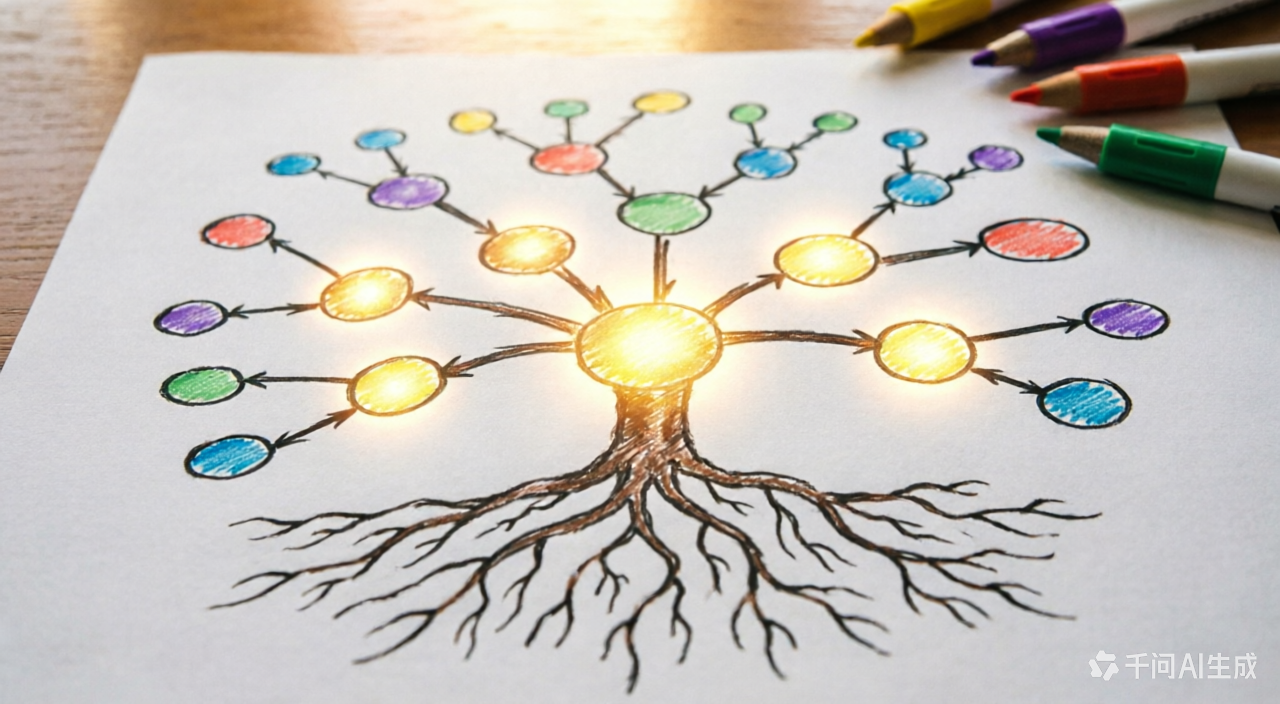
At first you might draw it incomplete or wrong — that’s fine. Keep drawing, keep thinking. Gradually your brain develops a structured muscle memory. When new changes occur, you’ll see the big picture faster and more accurately than anyone else.
Conclusion: Walk to Where the Information Comes From
Back to the original question: if you had NT$500K in 2008, what would you do?
The real choice was already determined by your information level before you even made it.
The opportunities you can’t see are the real opportunities. When an opportunity becomes common knowledge and easily accessible, it’s usually no longer the best opportunity.
Don’t be Da-Zhuang burying his head in the field. Don’t settle for being a hardworking Er-Ming. Start today, consciously training your “San-Si thinking” — move your information pipeline upstream. Don’t wait downstream for news to knock on your door — walk to where the news originates.

This cognitive upgrade is the most precious wealth no one can take from you. Its returns will far exceed buying any stock or any property — because what you gain isn’t one success, but the ability to continuously discover opportunities and create success.
Success doesn’t happen randomly — it’s the result of accumulated advantage. Those who always seem to catch opportunities aren’t lucky; they positioned themselves where information flows before opportunities arrived.
The map to financial freedom has always been hidden in the information we encounter every day. It’s right beneath your feet, waiting to be discovered.
This article is adapted from shared content on the “Qian Jin” channel. It is an opinion piece and narrative retelling, not investment advice.
Comments