Most people believe poverty stems from a lack of money—
But today’s story will show you how the person you trust most, which is yourself, pays the price of an entire lifetime over trivial thoughts that cross your mind every single day.
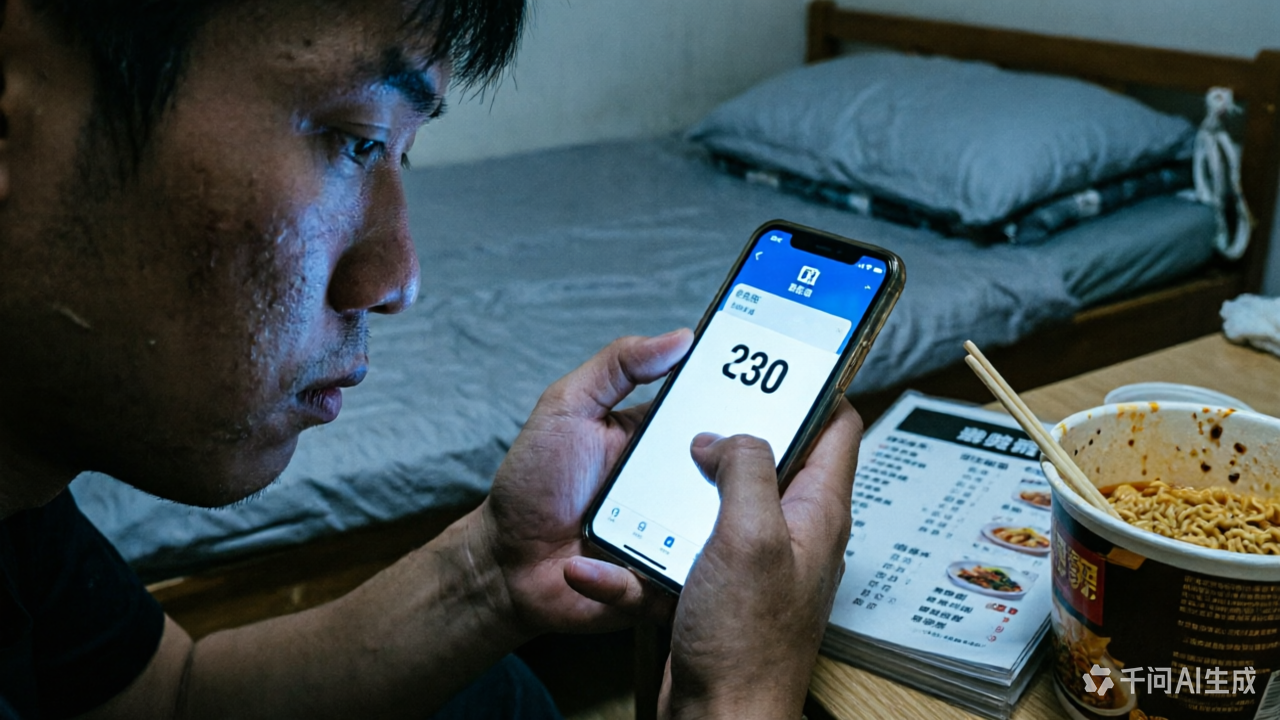
Let’s call the protagonist of this story Yu. His life holds no extraordinary tales. Just like you and me, he struggles to make a living in Taipei, a city people both love and hate. He rents a shared apartment where two other tenants share the bathroom with him, and commutes an hour each day to his office in Neihu.
His monthly salary is NT$38,000. This figure sits below Taiwan’s average wage, yet far from the lowest. Anyone who has lived in Taipei will recognize this as the trap of moderate, fragile affluence—it covers rent, transit fees, and student loans just enough to keep him from going hungry, yet leaves absolutely no room for savings.
1. Yu’s Vicious Cycle of Scarcity: Rich on the 5th, Drained by the 25th
Yu’s life is a perfectly repeating tragedy.
Paycheck hits his account on the 5th of every month, his brief window of feeling financially comfortable. He immediately treats himself to a bowl of ramen he’s saved to try for months, or buys a jacket he tried on at Zara but couldn’t bring himself to purchase earlier.
He tells himself, This is a reward, proof of all my hard work. But we all know this is merely compensation—chasing small, instant joys to mask overwhelming anxiety about the future.
His greatest enemy is neither his demanding boss nor a stagnant economy. It is the automatic voice playing on a loop inside his head:
- I’ve worked so hard this month; I deserve a nice meal, don’t I?
- This jacket is only a little over a thousand NT dollars—it’ll lift my mood so much.
- Life’s tough enough; a drink to unwind will give me energy for work tomorrow.
This voice sounds perfectly reasonable, even deeply human. What he failed to realize back then was that this most sympathetic, relatable inner voice was tangling around his life like creeping vines, trapping him in place.
Scroll through Dcard or PTT, and you’ll see countless posts with similar headlines: How do people survive in Taipei on NT$35,000 a month?, All my classmates own homes while I’m still renting—am I a failure?, Salaries never keep up with skyrocketing housing prices.
No matter how hard you work, your desires feel endless. After covering all mandatory monthly expenses, barely any cash remains. It feels like this leftover money can do nothing but buy fleeting happiness in the moment.
So I ask you reading this: Faced with this small pool of disposable income each month, what would you choose? Invest in an uncertain future, or buy guaranteed instant gratification right now?
Yu made the same choice 99% of his past selves and roughly 90% of us would make: he chose consumption, chose the certain present.
The result? Every month after the 25th, his life drops into low-power mode. Staring at the three-digit balance in his bank account, he drowns in anxiety, regret, and self-doubt—then waits for the 5th to roll around again, repeating the exact same cycle as the month prior.
He was trapped in a loop of poverty, spinning his wheels endlessly.
2. Dusk on the 18th: A Handwritten Secondhand Note Worth NT$500
Just as he resigned himself to a lifetime stuck in dead-end low-wage work—
A trivial incident, the kind we all encounter daily yet never notice, dropped a pebble into the stagnant pool of his life.
It was the 18th, his least favorite day: the agonizing final week before payday, with only a few hundred NT dollars left in his pocket.
He wandered aimlessly, scanning yellowed flyers plastered on the community bulletin board: plumbing services, guitar lessons, apartment rentals… As he turned to leave, a handwritten A4 sheet caught his eye.
The handwriting was messy, reading:
Personal induction cooker, fully functional, NT$500 self-pickup. Contact Aunt Lin if you’re moving and don’t want to haul it away.
His first instinct, as always, flickered across his mind: Just someone selling cheap secondhand junk. He lifted his foot to walk away out of habit.
But that evening, perhaps the quiet twilight or his empty wallet gave him pause. He stopped.
A second foreign thought crossed his mind, one he barely recognized:
This Aunt says she “doesn’t want to deal with it.” Does this “hassle” mean dozens of people just like her also hate sorting out unwanted belongings? Could this reluctance be an unmet need I can solve?
Let’s break down this pivotal moment in depth.
This was far more than a random flash of inspiration—it was a miniature mental battle between two mindsets playing out inside him.
| Thought | Mindset | Core Focus | Point of Concern |
|---|---|---|---|
| First thought | Consumer Mindset | Inward-looking | What do I have? What do I lack? What can I buy? This is useless to me, move on |
| Second thought | Budding Entrepreneur Mindset | Outward-looking | What problems do other people have? What do they need? What solutions can I provide? |
This shift in thinking may seem insignificant, even fanciful. But at that second, Yu stood at a crossroads: one path led to repeating his old life, the other to a completely unknown future.
He hesitated in front of the board for roughly a minute, two inner voices clashing:
- One scoffed: Don’t be ridiculous. How much money could you possibly make from this? You’d be better off rushing home to play games.
- The other voice was faint but persistent: What if it works? There’s no real loss in trying, right?
He recalled scrolling social media days earlier, seeing a photo posted by a college classmate on Instagram—this former lunch buddy had signed paperwork for a small apartment in New Taipei City. He’d hit the like button back then, his chest burning with bitter envy.
That sharp twinge of jealousy surged back to him.
In that instant, Yu made a decision unlike any he’d made in over two decades of life.
He pulled out his phone and snapped a photo of Aunt Lin’s phone number on the flyer. He turned and walked toward the convenience store at the street corner—but this time, he bypassed the refrigerated beverage section entirely. He headed straight to the ATM, withdrew his last NT500 exchanged for smaller bills, please?”
He was about to run an experiment, one that cost nothing but a little courage.
3. His First Deal: Selling a NT800
You might wonder: it’s just a beat-up old cooker. Even if he sold it, how much profit could there be? NT200?
True—if you only look at cash, this venture was tiny. But Yu quickly realized the most valuable thing he gained was far more than money.
Back home, he spent a long time psyching himself up to call Aunt Lin. What would he say? Would she mistake him for a scammer?
He took a deep breath and dialed. An impatient middle-aged woman’s voice crackled through the line:
“Hello, who’s this?”
Yu replied:
“Hi Aunt Lin, I saw your flyer about the induction cooker for sale.”
“Yeah, you buying? NT$500, come pick it up yourself.”
Gathering his nerve, Yu delivered the pitch he’d hastily drafted:
“Aunt, I’m not looking to buy it. I noticed you wrote you don’t want to handle selling it, and I figured you’re probably swamped. What if I take care of everything for you? I’ll deep clean it, take photos, and list it online. Once it sells, I’ll keep a 20% service fee and send you all the remaining money. If it never sells, I’ll return the cooker untouched, no charge at all. Does that sound alright?”
Silence hung on the line for five long seconds. Yu’s heart raced, convinced he sounded like a con artist.
Then Aunt Lin spoke:
“Let me make sure I get this straight. I don’t have to lift a finger—you hold onto the cooker, I get the money once it sells, and if no one buys it, I lose nothing. Is that right?”
“That’s exactly it.”
“Sounds good, no problem. When can you come get it?”
The deal was sealed effortlessly, almost surreal to Yu.
Let’s break down the deal structure:
| Party | Risks Taken | Rewards Gained |
|---|---|---|
| Yu | Time, physical labor, risk of wasted effort if the item never sells | Opportunity to earn a 20% service commission |
| Aunt Lin | Zero risk | Outsourced a nuisance completely, no upfront cost |
The core reason this offer worked was that Yu absorbed all risk, presenting her with an unrefusable proposition. For new operators with no established reputation, this is nearly the only viable approach.
After hauling the cooker home, he saw it was far grubbier than expected, caked in hardened grease and sauce stains. He spent an hour scrubbing it down, emptying half a bottle of household cleaner, until it looked nearly 80% new.
Next came his most critical step: he didn’t snap a couple blurry phone photos under dim indoor lighting. He researched how to shoot appealing product photos and learned simple tricks. The next morning, around 9 a.m., when natural light was softest, he carried the cooker beside his room’s only window, using a blank white wall as a backdrop, and shot over a dozen crisp, well-lit photos from every angle.
Then he listed the item online. He skipped generic titles like “Cheap secondhand induction cooker for sale.” Instead, he thought about who would need a used cooking appliance: university students, young working renters, landlords avoiding expensive new home goods?
His listing headline read:
Must-Have for Landlords & Student Renters | Nearly-New Brand Induction Cooker | Fully Functional, Fast Heating | Perfect for Students, Young Professionals, Renters | In-Person Pickup Available, Delivery & Shipping Options Offered
The full description detailed its dimensions and power output, and he emphasized it had been fully sanitized, ready to use straight out of the box.
After finishing the listing, he stared at the page with an unfamiliar feeling he’d never known before.
It wasn’t excitement over potential profit—it was a profound sense of created value. A discarded item worth NT800. The process shook him to his core.
Less than three days later, his phone pinged—someone placed an order.
On the day of the in-person meetup, a man who looked like a landlord inspected the cooker and handed over NT760.
He transferred NT500 base price plus NT500, and now earned extra cash while dodging the hassle of selling it herself.
Yu clutched his NT$208 earnings as he walked home, his hands trembling uncontrollably.
This NT208 earned through overtime. A paycheck trades hours for money, passively waiting for a company to deposit funds. But these NT$208 were value he actively built through insight and action, extracted from an unmet demand he’d identified.
Anyone who’s freelanced or run a small side business will recognize this feeling: the first income you earn independent of clocking in at a full-time job delivers a unique sense of achievement entirely separate from receiving a salary, no matter how small the amount.
A seed quietly took root in his mind: his life didn’t have to revolve around office work alone. He could generate value without relying on an employer.
This shift in perspective was worth ten thousand times more than NT$208.
4. Word-of-Mouth Takes Off: A 100-Word Neighbor Recommendation Outperforms 20 Flyers
Elated by his first success, Yu felt like he’d discovered an uncharted continent.
He began systematically replicating his consignment resale model across his old apartment building. No longer waiting passively for opportunities on the bulletin board, he decided to take initiative.
He designed a simple flyer in Word with the headline:
Do You Have Unwanted Secondhand Items You Hate Sorting Out?
Beneath it, he briefly outlined his service: free pickup, complimentary cleaning and photography, fees only charged once items sell. He printed 20 copies and posted them throughout elevators, stairwells, community boards, and every visible wall, then waited for inquiries.
He expected calls to flood in immediately. But a full day passed with zero messages; three days brought not a single phone call; a week went by without a single lead.
Yu hit the first and most common roadblock for new ventures: the trust barrier of cold outreach.
Would you spiral into self-doubt if you poured time and energy into a project only to hear crickets? Wonder if your idea was unrealistic, if no one needed this service, and resign yourself back to stable office work?
Most people quit here, mistaking temporary market indifference for proof their idea is flawed.
Yu felt the same crushing discouragement. Staring at the stack of leftover flyers piled in his room, he felt utterly foolish.
The night he planned to tear all the flyers down, he suddenly thought of Aunt Lin.
A thought struck him: Trust cannot be created out of thin air—but it can be borrowed.
He mustered up his courage, grabbed a small bag of fruit, and knocked on Aunt Lin’s door. He explained his stalled business and sheepishly asked if she’d be willing to vouch for him in the building’s resident LINE group.
Aunt Lin thought the young man was honest and reliable, and agreed without hesitation. She opened LINE and posted a message in the group of over 200 tenants:
Hello neighbors! The young man Yu who sold my induction cooker now offers help selling unwanted secondhand goods. He’s trustworthy and thorough—reach out to him if you have clutter you don’t want to deal with.
This short message, under 100 words, rippled through the quiet community like a bomb.
Everything reversed in ten minutes flat: three friend requests popped up on his LINE instantly, five phone inquiries arrived the next day, and that weekend he hauled seven unused items from three separate neighbors’ apartments.
Trust had ignited. He realized that within a tight-knit community, word-of-mouth—especially from a trusted resident—outperforms ten thousand printed flyers.
This is the power of social proof.
5. NT$20,000–30,000 Monthly Side Income After Three Months: The Start of Mental Transformation
Over the next three months, Yu’s after-work schedule became far more fulfilling than his full-time job. His tiny apartment turned into a community hub for secondhand goods circulation.
He met all kinds of people and heard their life stories:
- Couples soon to marry clearing out rental furniture
- Parents whose children had grown up, selling unused cribs
- Students preparing to study abroad, liquidating every household item in their apartment
He realized every unused item marked a new chapter in someone’s life—and he was the person helping them let go of clutter to move forward.
In these three months, his side business of solving people’s clutter and selling unwanted goods brought in a steady NT30,000 extra each month.
He was no longer living paycheck to paycheck. For the first time in his life, he logged into his bank account at month’s end and saw a five-figure balance of freely disposable savings.
The first thing he did with this money was not buy that Zara jacket or splurge on fancy ramen. He paid off thousands of NT dollars he’d borrowed from friends. When he settled his final debt, the invisible weight he’d carried on his shoulders vanished completely.
This sense of relief was far more genuine and long-lasting than any fleeting joy from shopping sprees.
6. Hitting a Ceiling & Second Mental Upgrade: From Consignment Seller to Space Organizer
If the story ended here, it would merely be a generic tale of a young person boosting income with a side hustle.
What truly set him apart from everyone else was the decision he made next: he reinvested every cent he’d earned to unlock a higher-value, more profitable layer of expertise.
Though his income had risen, Yu quickly hit three new bottlenecks:
- Time Constraints: His daily after-work hours were limited, capping the number of items he could process. He grew exhausted, essentially working as a high-end cleaner and mover.
- Space Constraints: His small apartment was overrun with inventory, destroying his quality of life.
- Profit Volatility: Earnings from secondhand goods were inconsistent—he might make NT200 from several small trinkets the next.
He understood his current model still traded time and physical labor for money—fundamentally identical to office work, only now he answered to himself instead of a corporate boss.
He needed to level up his business.
He dug deeper into a critical question: What unaddressed pain point lay beneath every client’s desire to sell their clutter?
He followed up with his repeat customers to chat, and uncovered a shared sentiment:
After selling all this junk, my place still feels messy.
This single line struck Yu like lightning.
He grasped the truth: Selling unwanted belongings was only a surface-level, band-aid solution. The deeper, core problem was chaotic living spaces causing constant stress.
People didn’t merely want to get rid of old items—they craved clean, orderly, controllable living environments.
This realization marked a massive leap in his mindset. He shifted from solving surface laziness to resolving underlying anxiety. The latter service held exponentially greater value: clients viewed resale help as manual labor, but professional space organization as transformative, life-changing support.
Yu made a bold pivot: he would transition from consignment resale to professional home organizing services.
He didn’t rush into the shift blindly. He knew this upgrade demanded expertise, not brute strength. He reinvested most of his three months’ earnings into growth:
- A portion paid for a professional online home organizer certification course, where he systematically learned space planning, traffic flow design, and item categorization principles.
- Another portion funded a wide range of premium storage supplies, which he tested personally to curate the most effective products for his clients.
Over two full months, he rebranded himself from a secondhand goods seller to a semi-professional space management consultant.
His first official organizing client was the woman from the LINE group who’d previously sold more items through him than anyone else.
He offered her a heavily discounted introductory rate. Over an entire weekend, he spent eight hours overhauling her cluttered storage room with surgical precision.
He emptied every box, sorting belongings into three piles: keep, donate, discard. Using his new training and storage supplies, he labeled and categorized all kept items, redesigning the entire layout of the storage room for maximum efficiency.
When the woman saw the finished space, she stood speechless. Where a disorganized pile of unfindable junk had once sat stood a streamlined, intuitive storage area where every item was instantly visible.
Overjoyed, she snapped before-and-after photos and posted them to her personal Facebook and the community LINE group, writing:
I never knew my storage room could look this good! Hiring Yu to organize beat buying endless cheap cabinets a hundred times over.
This wave of word-of-mouth was ten times more powerful than Aunt Lin’s earlier recommendation—striking visual before-and-after comparisons create the most impactful organic referrals.
His business evolved beyond simple item resale into a premium service. He no longer only sold organizing skills; he sold clients a sense of calm and control over their chaotic lives.
His pricing shifted from variable percentage commissions of a few hundred NT dollars per job to a stable consulting fee of NT$800–1,000 per hour. His client base expanded far beyond his small apartment building; organic online exposure brought bookings from across Taipei and New Taipei City.
One year later, Yu quit his NT$38,000/month full-time job. He launched a small personal studio named Guiwei Life Organizing (Order Restored Life). No longer the cash-strapped spender hesitating over a convenience store beer, he built a new career by solving people’s clutter and disorganization, earning multiple times his former salary.
7. His True Starting Point Was Not That Lucky Induction Cooker
After hearing this story, you might dismiss Yu’s success as pure luck, a random chance encounter with a secondhand appliance.
But let’s objectively retrace his entire journey:
His real starting line was neither the cheap cooker nor the kind Aunt Lin. It was the moment he stood in that convenience store, choosing to skip buying a drink to unwind, and instead converted his last cash into startup capital.
In that split second, he rejected consumption as a temporary fix for daily exhaustion, and instead made a tiny investment to test a potential future. With minimal upfront cost, he validated two critical truths:
- The demand for outsourcing clutter cleanup was genuine.
- He possessed the ability to turn a simple consumer need into a completed sale.
Where do most of us fall short?
We spend our lives waiting for perfect conditions: waiting to save a startup nest egg, waiting to find a guaranteed profitable project, waiting to build a bigger network, waiting for an economic upturn.
Yet the harshest reality of business—and life itself—is this: Those who act first gain experience, profit, and the power to define their market. Late entrants fight brutal price wars in saturated industries, while those who never take action are left with endless anxiety and the hollow regret of “I should have tried.”
8. Shift Your Mindset, and Your Entire World Changes
Stories identical to Yu’s unfold around us every single day, in countless forms:
- The street food vendor on Raohe Street Night Market who notices customers hate greasy takeout bags, offers extra sleeves and bamboo skewers, and sells pocket tissues alongside fried snacks—he understands this logic.
- The senior students on Dcard’s exam forum who compile all past exam papers and professor lecture notes into polished, easy-to-read PDFs sold for NT$50 each—they grasp this logic too.
- The coworker in your office who volunteers to coordinate group afternoon tea orders, stacking platform discounts and credit card rewards to earn quiet extra cash each month—he also lives by this mindset.
None of these people are business prodigies with privileged backgrounds. They simply fought to rewire their brains from the default consumer mindset into an entrepreneurial way of thinking, far earlier than most.
They do not view their spare cash as loose change only worthy of coffee runs or movie tickets. Instead, they see it as the critical first seed capable of launching a venture, testing an idea, and growing into compounding opportunity.
So I’ll leave you with one final question:
Pull out your wallet or open your mobile banking app, and glance at your available balance. Do you only see a number meant to be spent and consumed? Or could it be the ticket to the next chapter of your life’s story?
How will you choose to use your NT1,000?
Most people fail not because they start from nothing, but because they never give themselves permission to start differently.
This narrative is adapted from a true case study, intended solely to inspire alternative personal business models. The transition from consignment resale to professional organizing is challenging, requiring formal training, consistent client outreach, and sustained effort. This article does not encourage reckless entrepreneurship; its core message urges everyone to shift from a consumer mindset to an entrepreneurial mindset early, to build more choices for their own lives.
Comments