Have you ever done the math? You drag yourself out of bed at 7 a.m., spend an hour commuting, spin like a top at the office for eight hours, then drag your exhausted body home for another hour. Ten hours a day, sold to your job. But what about the money sitting in your bank account? It’s probably lying there earning less than 1% a year—practically asleep.
You grind overtime while your money takes a nap. Is that fair?
Today I’m not going to talk about the scary art of chasing highs and panic-selling lows. Instead, I’m sharing an asset allocation strategy I’ve personally run with NT$500,000 of my own money. The core concept is simple: let your money start working for you, instead of you forever chasing it.
I know many people hear the words “investing” and “financial planning” and their heads start spinning. They picture themselves staring at jumping stock prices, or waking up to find their savings evaporated. But honestly, if investing makes you lose sleep every night, that’s not financial planning—that’s paying money to suffer.
Real asset allocation should work like setting your washing machine. Press a button, go do other things. When the timer rings, your clothes are washed and dried.
1. The Hidden Monster Eating Your Money: Three Myths to Break
Before we get into the specifics, we need to dismantle a few deeply rooted misconceptions.
Myth 1: Investing Is Risky, Saving Is Safe
Sounds reasonable, right? But here’s the problem: when prices rise 2% a year and your savings account yields only 0.8%, your money is actually shrinking by 1.2% annually in real terms.
Do the math: in 20 years, that NT$500,000 will have the purchasing power of roughly NT$440,000. Does that still feel safe?
Myth 2: You Need a Lot of Money to Start Investing
Many people think you need millions before you can even talk about investing. But actually, NT$500,000 is a fantastic starting line—the key isn’t the size of your principal, but whether you’ve started building a system.
It’s like going to the gym: you wouldn’t skip training just because you only have 5-kilogram dumbbells. The point is building the habit and perfecting your form.
Myth 3: Investing Means Staring at Charts All Day
If you’re a full-time professional investor, that’s one thing. But for the vast majority of office workers, your time is too valuable. Instead of spending three hours analyzing a single company, invest that time in upskilling, being with your family, or finally catching up on sleep.
The core spirit of passive investing is to admit the market is smarter than you. Don’t try to beat it—join it.
2. Why I Emphasize the NT$500,000 Number
Because it’s a magical psychological threshold. When your investment account holds NT$500,000 and starts generating cash flow, you’ll experience for the first time what it feels like for money to work for you.
Assume you earn 6% a year—that’s NT$30,000 annually, or about NT$2,500 a month. That might not seem like much, but the key is it drops in automatically while you’re sleeping, binge-watching shows, or on vacation. That feeling will completely transform how you view money.
I still remember the first time I saw dividends automatically credited to my account. It was surreal. The amount was small, but it was the first time I truly understood “passive income.” It’s like planting a tree yourself—slow growth, but you know it’s growing every day, and one day it will blossom and bear fruit.
This psychological shift is incredibly important—because it makes you see work and life from a completely new angle.
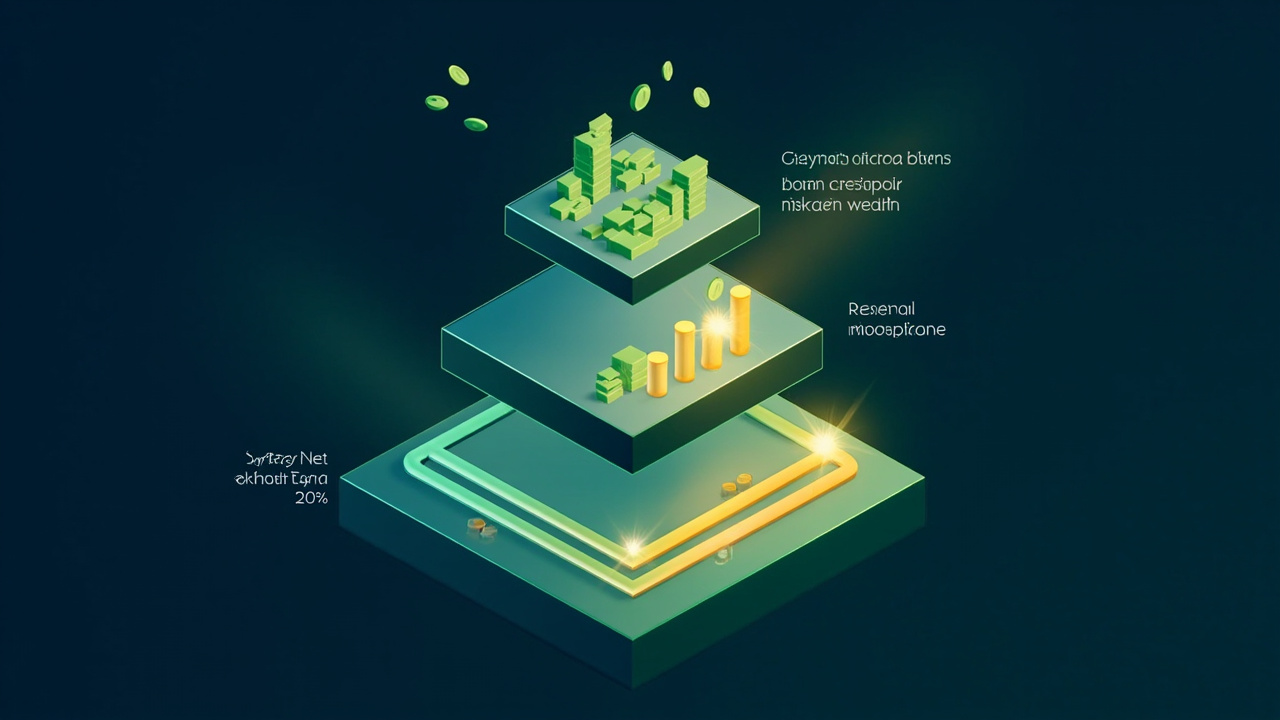
3. The Three-Layer System: Safety Net × Growth Engine × Opportunity Reserve
If asset allocation is this simple, why can’t most people do it? The answer is straightforward: because most people don’t have a system.
They might watch a YouTube video and impulsively buy a stock, or follow a friend’s hot tip with no overall plan. It’s like wanting a healthy body—today you spontaneously run 10 kilometers, then don’t move for three months. Of course that doesn’t work.
Let me break down my NT$500,000 system in detail. I divide it into three core layers:
Layer 1: Safety Net (20%, NT$100,000)
I set aside 20% (NT$100,000) as an emergency fund. This money isn’t for investing—it’s parked in a high-yield savings account or short-term time deposit.
You might think: isn’t that wasteful? Trust me, this NT$100,000 is the source of your psychological security. When you know you can immediately handle a broken water heater, car maintenance, or sudden job loss, you can truly let the rest of your money charge into the market with peace of mind.
Key insight: Most people fail at investing not because they pick the wrong assets, but because an emergency forces them to liquidate at the worst possible moment. It’s like running a marathon—if you sprint at the start, you won’t last. This NT$100,000 is what keeps your pace steady.

Layer 2: Growth Engine (60%, NT$300,000)
This is the heart of the allocation. I put 60% (NT$300,000) here. The goal is simple: steady long-term growth.
I invest primarily in a combination of global stock ETFs and bond ETFs. Specifically, I split the NT$300,000 into two parts:
- 70% (about NT$210,000): Track global stock markets through ETFs like VT, or for Taiwan investors, 0050 or 006208
- 30% (about NT$90,000): Bond ETFs or investment-grade corporate bonds
Why this split? Because stocks represent growth—long-term annualized returns of 8% to 10% are possible, but with high volatility. Bonds provide stability—lower returns around 3% to 5%, but they typically hold up or even rise during stock market crashes.
Combining the two is like yin and yang in harmony, letting your portfolio grow without violent swings.
Important point: don’t fantasize about catching the exact bottom. Even professional fund managers can’t time the market, let alone us. A better approach is dollar-cost averaging, or splitting that NT$300,000 over six months with NT$50,000 per month—averaging out your entry cost.

Layer 3: Opportunity Reserve (20%, NT$100,000)
I reserve the final 20% (NT$100,000) as flexible capital. Its purpose: when the market drops noticeably, you can confidently add to your positions.
What counts as a noticeable drop? My own rule: when the index falls more than 15% from a recent high, I start deploying this money in batches.
You might ask: but if the market keeps rising, doesn’t that NT$100,000 go to waste? True, it’s a trade-off. But you can park that NT$100,000 in a money market fund or short-term government bonds, earning at least 2% to 3%, so it doesn’t sit completely idle.
More importantly, when the market really crashes and most people are panic-selling, you have cash bullets to pick up bargains—this psychological advantage is priceless.

4. Five Steps to Start Your Money Machine
You might think this sounds complicated. Don’t worry—the actual steps are easier than you imagine.
Step 1: Open a Brokerage Account
Online account opening is super convenient now. With your ID and bank account ready, you can be done in about 10 minutes. When choosing a broker, look at fee discounts and whether the interface feels smooth. Some brokers even offer ETF dollar-cost averaging fee reductions.
Step 2: Set Up Auto-Deduction
This is critical because human nature is inherently lazy. If you have to place orders manually each time, you’ll find endless excuses to procrastinate. Once it’s set up, every time your salary hits your account, the system buys automatically—you don’t have to think.
It’s like auto-paying your mortgage or utility bills. After a while, you get used to it and even forget the money exists.
Step 3: Pick Your Investment Vehicle
If you really don’t know where to start, the simplest approach is picking a total-market ETF:
- US markets: VTI or VO
- Taiwan markets: 0050 or 006208
Don’t waste time agonizing over which is “best”—there’s no best, only most suitable. Better to act fast than to keep comparing.
Step 4: Set Up a Rebalancing Mechanism
What is rebalancing? Say you set your target at 70% stocks, 30% bonds. After a year, stocks have risen more, and the ratio becomes 80:20. You then sell some stocks and buy some bonds to bring it back to 70:30.
Sounds counterintuitive, right? Sell the winners, buy the losers. But that’s the essence of rebalancing—it forces you to “sell high and buy low.”
I do it every six months—not too frequent, not too rare. It sounds like a hassle, but each session takes less than 30 minutes and keeps your portfolio in optimal shape.
Step 5: Keep Learning—But Don’t Overreact
Investing is a lifelong journey, so yes, keep absorbing new knowledge and understanding market changes. But that doesn’t mean staring at screens every day or adjusting holdings every week.
My own habit is to spend one or two hours a month reading financial articles or watching videos—just to grasp the big picture, not chasing every short-term fluctuation. Remember a brutal statistic: on average, retail investors underperform market indices by 3% to 5%.
Why? Frequent trading and emotional decisions. The best investment strategy is usually the most boring one: buy, hold, rebalance periodically. That’s it.
5. The Truth About Compounding: Where Will NT$500,000 Be in 30 Years?
You might ask: what kind of returns can I realistically expect from this setup?
According to historical data, a 70/30 stock-bond portfolio delivers about 6% to 8% annualized returns over the long term. That might not sound like much, but remember—this is the real return, already adjusted for inflation.
Let’s run the numbers:
| Scenario | Initial Capital | Annual Return | After 10 years | After 20 years | After 30 years |
|---|---|---|---|---|---|
| NT$500K only | NT$500K | 7% | NT$980K | NT$1.93M | NT$3.8M |
| NT$500K + NT$10K/month | NT$500K + NT$10K monthly | 7% | NT$2.3M | NT$5.8M | NT$15M |
If you can also force yourself to invest an extra NT$10,000 a month beyond the initial NT$500,000, your total assets could exceed NT$15 million in 30 years. This is the power of compounding.
Einstein reportedly said: “Compound interest is the eighth wonder of the world.” He wasn’t joking.

6. Your Biggest Enemy Is Yourself—Not the Market
I have to be honest with you: there will be setbacks along this road. You will absolutely face market crashes and the gut-punch of watching your account go red.
In March 2020, when the pandemic hit, my own account was down over 30% at one point. That feeling was excruciating. But I didn’t sell, because I knew it was short-term volatility and my bond allocation was cushioning the fall. By year-end, not only had I recovered everything, I was actually ahead.
That experience taught me a profound truth: the biggest enemy in investing isn’t the market—it’s your own emotions.
That’s why I keep emphasizing building a system. A system helps you overcome fear and greed—when the market crashes, you don’t need to make any panicked decisions, because your system already told you the answer: keep buying, or do nothing.
Another important mindset shift: don’t treat investment returns as your only source of wealth growth.
Investing lets your money work for you, but your human capital is the most powerful asset you own. If you’re 30 now, earning NT$600,000 a year, working until 65—just your salary alone totals over NT$21 million. That doesn’t even count raises and bonuses.
So instead of obsessing over optimizing a few percentage points of return, also invest in yourself—learn new skills, accumulate experience, build your network. These will grow your main income, which in turn gives you more money to invest.
7. Take Action Now—Your Future Self Will Thank You
I’ve covered a lot. Let me quickly recap the key points:
The core concept of asset allocation: diversify risk, hold long-term, execute with discipline.
- For NT$500,000: 20% emergency fund, 60% core portfolio (stock ETFs paired with bond ETFs), 20% flexible opportunity capital
- Choose simple total-market ETFs
- Set up auto-deduction
- Rebalance every six months
- Then wait patiently
This strategy won’t make you rich overnight, but it can give you a real shot at financial freedom in 10, 20, or 30 years. More importantly, it lets you live through that process without daily anxiety, screen-watching, or worrying about picking the wrong stocks—you can spend your saved time and energy on what really matters: family, health, hobbies, or a career you genuinely love.
I know for many people, putting NT$500,000 into investments is a huge decision. There’s bound to be fear and hesitation. But flip the question: if you do nothing, and that NT$500,000 just sits in the bank, what will its real purchasing power be in ten years?
Inflation won’t wait for you to be ready. Every day, it’s silently eroding your wealth.
Rather than passively watching your money thin out, take the initiative and let it start working. Even if you’re scared or uneasy at first—that’s normal. But once you take the first step and build your system, you’ll find it’s not that hard. And as time passes, watching the numbers in your account grow slowly, the sense of accomplishment and security is something no amount of money can buy.
Finally, I want to say: don’t wait until you feel ready to start—because you never will. The market always carries risk, always has uncertainty. But that’s not an excuse for inaction.
What you need to do today is spend 30 minutes after you get home researching how to open a brokerage account, or list your existing assets to see how much you can start deploying. You don’t need to do it all at once—start small, NT$5,000 or NT$10,000 a month is fine. The key is to start and build the habit. Once you’re familiar with the process, gradually scale up.
Remember: the best time to invest was ten years ago. The second-best time is right now.
NT$500,000 isn’t a huge number, but it can absolutely be your launchpad to financial freedom. When you start letting money work for you instead of you forever chasing it, you’ll find life’s pressure eases, your confidence in the future grows, and you gain more freedom of choice—that’s the true meaning of financial planning. Not about becoming ultra-rich, but about giving yourself the right to choose how to live.
Take action now. The you of ten years from now will look back and thank yourself for making this decision today.
This article is for personal experience sharing only and does not constitute any investment advice. All investing carries risk, and past performance does not guarantee future results. Please assess your own risk tolerance carefully and consult a professional financial advisor before making any decisions.
Comments