
Have you ever had this experience — you work really hard, open your banking app, look at your account balance, and somehow the number just refuses to climb? Is it the economy? Is your salary too low? Are prices still rising? Of course those factors all matter, but the real core of the problem usually lies somewhere else entirely.
Many people can’t save money, not because they don’t earn enough, but because money keeps leaking out through invisible holes — and they never bother to plug them.
The standard that creates financial distance between people is surprisingly simple: some people tend to buy things that bring money back to them, while others unknowingly buy things that take money away. The trouble is, many people buy things that continuously drain their money while calling them assets in their head, so they easily conclude “I’m just born unable to save money.”
Most of the time, the problem isn’t you — it’s where your money flows every single day. Today we’ve organized the five most common spending categories that prevent people from saving into five types, and we’ll break them down one by one. This isn’t a lecture telling you to suffer in silence. It’s a user manual for redirecting the flow of your money back to where it should go.
The First Hole: A New Car — The Depreciation Black Hole That Makes You Look Cool But Stay Broke
You walk into a showroom. Under the lights, that new car gleams, polished and pristine. You sit inside, smell that brand-new scent, your heart races, and you can’t help but want to take photos, share with everyone, and shout “I made it!”
But you know what? The moment that car leaves the showroom and actually hits the road, its value starts dropping. It’s not because you bought the wrong brand or because you don’t know how to maintain it. It’s because the new car category has a very obvious depreciation curve. In many cases, the depreciation within a year is significant, and three years later, the gap between the resale value and the original price is often so large it hits you in the gut.
Say you buy a brand-new car for around NT$1 million. A few years later, the gap between its resale value and the original price is huge — and this is extremely common. The gap in between means you’re paying in “depreciation.” Of course, it brings convenience and quality of life — that’s fair. But the problem is: many people don’t treat depreciation as a cost, so they underestimate just how expensive it really is.
And it’s not just depreciation. Many people don’t pay cash for their car — they finance it. Interest rates, term length, and conditions vary wildly, but the reality you commonly see is a fixed amount of money locked up every month for several years. Monthly payments of NT$10,000 or more are completely realistic.
Think about it carefully — this is actually a very peculiar structure: a rapidly depreciating asset, with money locked into it at compound interest.
At this point, many people will say, “But car safety is so important.” Right, safety is important, but “safety” and “must be brand new” are two different things. Many three-year-old cars have already gone through a big chunk of their depreciation, the price is usually much friendlier, and quite a few are still under warranty or have complete maintenance records, and the car condition remains solid.
Comparing the same model: do you spend over NT$1 million on a brand-new car, or do you buy a three-year-old version at a lower price? The difference isn’t just about preference — it’s about where you put that price differential. If that difference doesn’t disappear into depreciation but stays in your investment or wealth account, in the long run it can become a very real gap.
The point isn’t to tell you not to buy a car. It’s to see clearly: do you want to be seen in the driver’s seat, or seen on the asset statement?
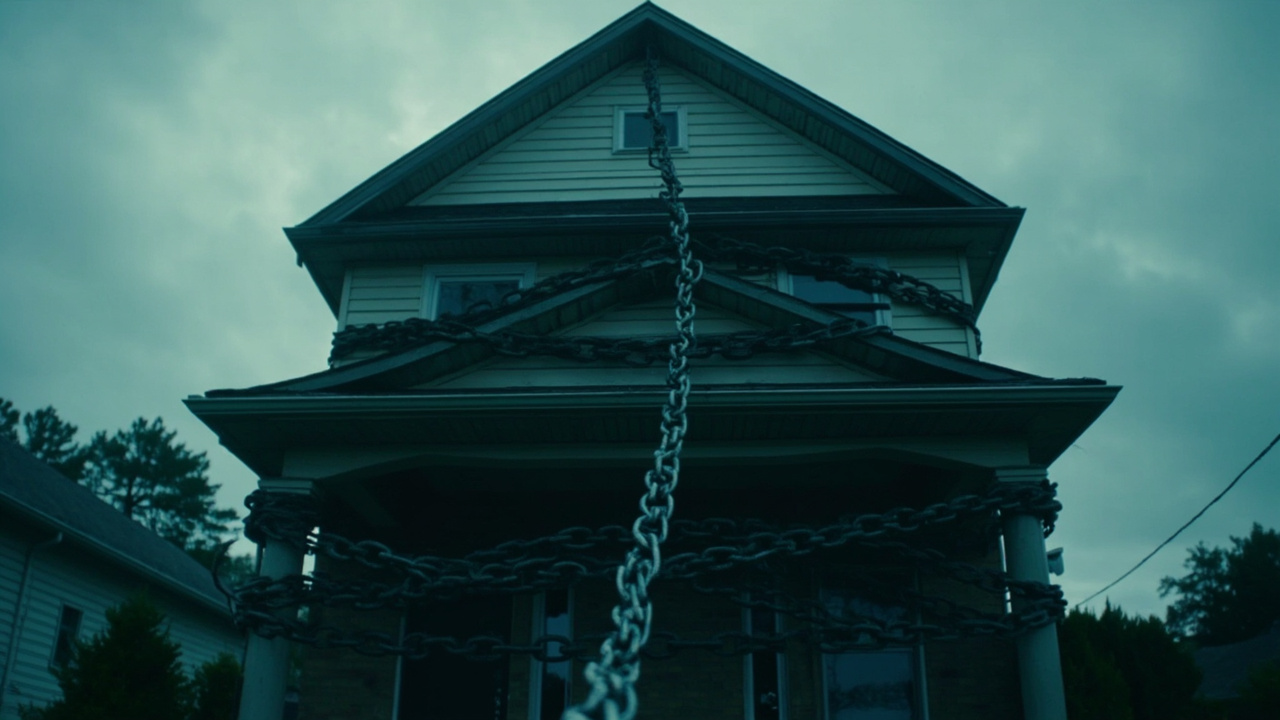
The Second Hole: Mortgage Pressure — Buying a House Beyond Your Comfort Zone
The most common thing that squeezes your finances is buying a house beyond your comfort zone. Many people have heard the saying “a house is an asset.” That statement isn’t entirely wrong, but if you treat it as universal truth, you can easily make decisions that leave you gasping for air.
From a cash-flow perspective, real assets are things that bring money back to your pocket, while liabilities and expenses continuously take money out. The home you live in is, more often than not, the latter. Management fees, property tax, land tax, repair costs, renovation updates — plus all the maintenance costs you don’t think about daily but absolutely exist. The bigger the house and the more refined the decoration, the more these expenses scale up: inverter AC, kitchen appliance upgrades, furniture replacement, repair and maintenance — even the time and energy you invest all grow.
Add it all up and you get an invisible monthly fee.
Someone will say, “But house prices might rise in the future.” They might. But not every area is the same, and not every point in time is on the way up. More importantly, even if house prices rise, turning that appreciation into usable cash usually requires selling the house or borrowing more. In other words, rising house prices and whether you can breathe easier each month are often two different questions.
Take a house that starts at over NT$10 million. With a long-term mortgage rate that doesn’t look high, the cumulative interest over the long term can be eye-watering. Depending on conditions, the interest alone for some people can accumulate to millions or even tens of millions of NT dollars — completely expected.
So banks often tell you “your credit line can go up to here.” But what that statement really means isn’t “you can safely borrow the maximum.” It means “if you borrow the maximum, you’ll be locked in for a very long time.”
Many people who understand this treat the statement as a warning — the moment you reach this line, it’s already too dangerous. A more stable approach is to buy a house within your truly comfortable range. You trade less square footage and fewer renovation ambitions for a more relaxed monthly cash flow, greater life flexibility, and higher psychological security.
Then you take the few thousand or ten-to-twenty thousand NT$ you save each month and regularly transfer it into your investment account. Ten or twenty years later, many people discover that what actually creates distance in life isn’t how big the living room is — it’s whether you retained cash flow that could compound.
You’ll see some genuinely wealthy people whose homes aren’t new or big, but whose investment assets are thick. They treat the home as “a space to live well,” and leave the job of making money for them to other assets. This is often far more efficient.
The Third Hole: Habitual Eating Out and Snacking — Quietly Stealing Your Options Every Day
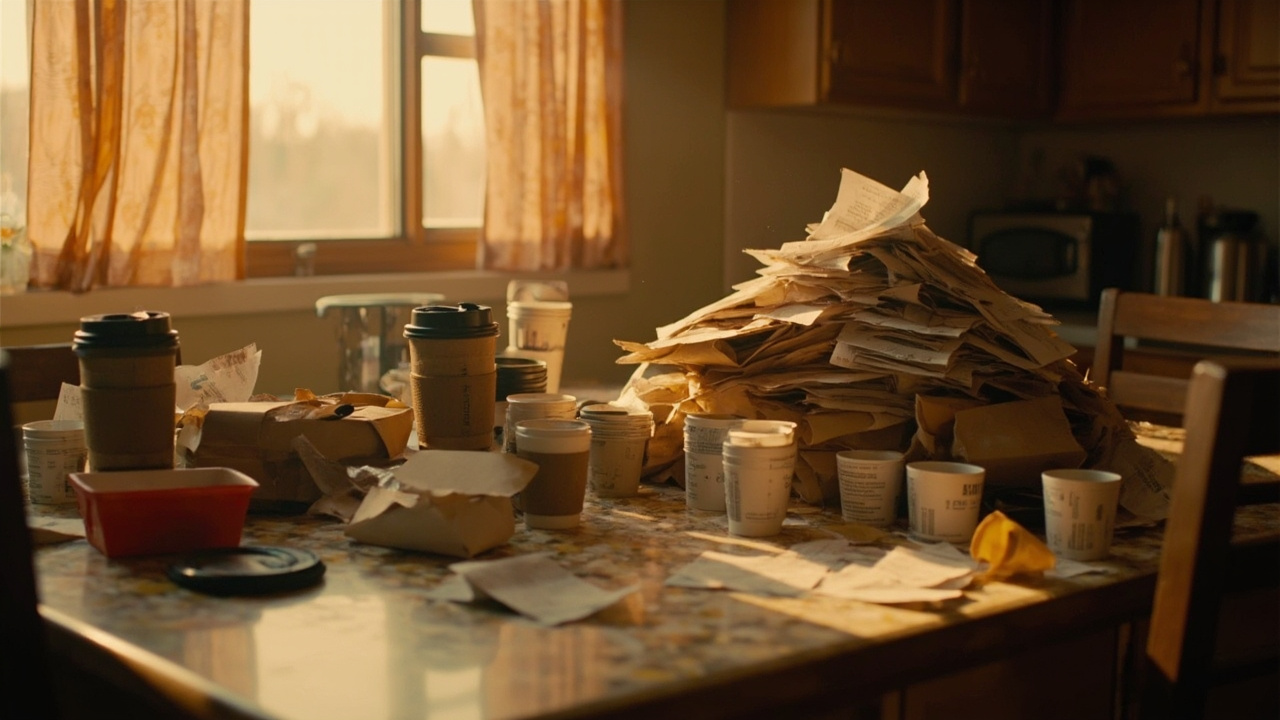
This is the most underestimated category of spending. On weekdays, a coffee at the convenience store in the morning, grab a bread roll on the way; a bento, hot pot, or buffet at lunch; too tired at night, so you open a delivery app; on weekends, brunch and a drink. Each individual charge looks small, and you might even think “I’m not really spending recklessly.” But add it all up for a month and you’ll often get a shock.
For some people, eating out and food delivery easily accumulate to several thousand or even close to NT$10,000 a month. Add coffee, desserts, and bubble tea, and the number can shoot right up.
The interesting thing is this: if you treat this money as a “life necessity,” it will always disappear. But if you treat it as “an option you can choose,” it becomes a lever you can control.
For example, take NT$10,000 a month, move it steadily into investments, and over the long term the accumulated asset size will be completely different. Conversely, if it keeps disappearing into delivery fees and desserts, you’re quietly shrinking your future options a little every month.
The point isn’t to never eat out. Extreme frugality rarely lasts, and once the pressure builds, it tends to explode into even more impulsive spending.
What really works is separating unconscious consumption from conscious consumption. You can keep it simple:
- Pack your weekday lunch; eat out two days a week
- Fix weekend desserts to once a week
- Don’t completely give up delivery, but use it only when you really need to
Once you have rules in place, decision fatigue drops, and money stays where it should. You’ll gradually extract yourself from the temptation of “let me buy one more.” And you’ll find that some eating-out experiences are absolutely worth it — gatherings with friends, important dates, the meal that genuinely makes you happy. Those are quality of life. But the consumption that’s just a habit? Looking back, the satisfaction is always short.
The sooner you separate the two, the harder it is for small expenses to drag you down.
The Fourth Hole: Clothes, Luxury Goods, and the Latest Gadgets — The Silent Cost in Your Wardrobe
The wardrobe is stuffed full, but you feel like you have nothing to wear. You see a sale and load up the cart. On social media, everyone is showing off new bags, sneakers, and phones in endless waves, as if you fall behind if you don’t follow.
But the truth is, the people who saw you yesterday can rarely remember exactly what you wore or which bag you carried. Everyone is busier than you think, and they care less than you imagine. What people remember most easily is the way you talk, your confidence, and how you do things — not the label on your shirt.
Truly wealthy people rarely let logos lead them around. They care more about the numbers on the asset statement, not because they don’t know how to enjoy life, but because they know how to distinguish what creates lasting value from what just consumes cash flow.
So when buying clothes, they more often ask themselves:
- How long can I wear this?
- How many occasions can I pair it with?
- Is the usage rate high?
A few basic pieces can often cover most life situations. The rest of the impulsive purchases end up as silent cost sitting in the wardrobe.
Try thinking about it this way: a piece of clothing you wear only once or twice a year that cost a few thousand NT$, versus the same amount moved steadily into your investment account — which one is more likely to make you freer in the future? The excitement a new piece of clothing brings usually fades after a few wears, but the numbers in your investment account slowly climb, and that solid sense of progress only grows stronger over time.
When you start enjoying this kind of “slowly getting better” happiness, your spending patterns rewrite themselves automatically. The point isn’t to tell you not to buy anything — the question is, are you buying what genuinely makes you happy, or are you just trying to patch a mood with a purchase in that instant?
If you can pause before swiping the card and ask: “Do I really need this? Would I be fine without it?” — a lot of unnecessary spending will disappear on its own.
The Fifth Hole: Subscriptions and Memberships — The Boiling-Frog Trap of Auto-Pay
What most people easily overlook is subscriptions and memberships — video platforms, music, cloud storage, games, e-books, fitness apps, all kinds of membership services. Each one looks cheap, maybe NT$100 to NT$300 a month, so you treat it as small change. But the scary part is this: once small amounts become auto-pay, you easily forget they exist.
Add them up and they become NT$1,200, even NT$2,000 or NT$3,000 — and that’s incredibly common. Many people think they only have a few subscriptions, then count them and discover a few that they signed up for once and forgot to cancel.
You can run a very small experiment: open your banking app or credit card statement, scroll down to the “recurring charges” section. The moment you see a charge and think “Hmm, am I still using this?” — that’s almost certainly something to clean up. Especially services you use fewer than three times a year — most of the time, you really can let them go.
And the key isn’t just “save the money.” The most important step is to immediately channel the saved money into investments. For example, if canceling a subscription saves you NT$500 a month, set that same amount to auto-transfer into an index fund or a long-term instrument you can hold. The amount might look small, but over time, the gap becomes very real.
The trap of subscriptions is: they never make you feel pain in a single moment, but they quietly take a little from you every month.
You can pick one fixed day a year as your “subscription audit day,” go through every subscription, and only keep the ones you actually use often and genuinely feel are worth it. This small habit does more for your cash flow than you’d ever imagine.
Conclusion: Plug the Five Holes, and the Curve Changes — Even If Your Income Doesn’t
When you tone down the new-car impulse, pull your housing desires back into your comfort zone, turn eating out and shopping into rule-based choices, and clean up your subscriptions — you’ll see something almost magical happen: your income hasn’t changed, but your asset curve starts moving in a different way.
Many people think “once my salary goes up, I’ll have surplus.” But reality is usually the opposite: as income rises, expenses inflate even faster. Better car, bigger house, more eating out, more frequent shopping, more subscriptions. In the end, your salary goes up, but your anxiety doesn’t shrink.
Conversely, even if your salary isn’t particularly high, as long as you plug these five holes, your assets can grow steadily.
The gap between abundance and tightness often isn’t about whether opportunity comes your way, but whether your pockets are empty or ready when it does.
So the next time you see a brand-new car, a beautiful house, a tempting food ad, a new clothing line, or the latest phone — please do just one thing: pause for one second, and ask yourself: will this money make me freer? Or will it give me a brief flash of joy, and then leave my account even thinner?
If you’re willing to give it that one extra second, your money will start flowing in a completely different direction. The stability won’t come from a miracle — it comes from the accumulation of small, daily choices. One day, when you look back at yourself right now, you can honestly say: “I’m so glad I stopped at those unnecessary places first.”
If today’s content helps you become a little more aware of, and in control of, your spending structure, you’ve already taken the first step. Start small. The future you will truly thank you.
This content is for personal finance education purposes only and is not investment advice. Any investment decision should be evaluated based on your own risk tolerance, and please consult a qualified financial advisor when necessary.

Comments