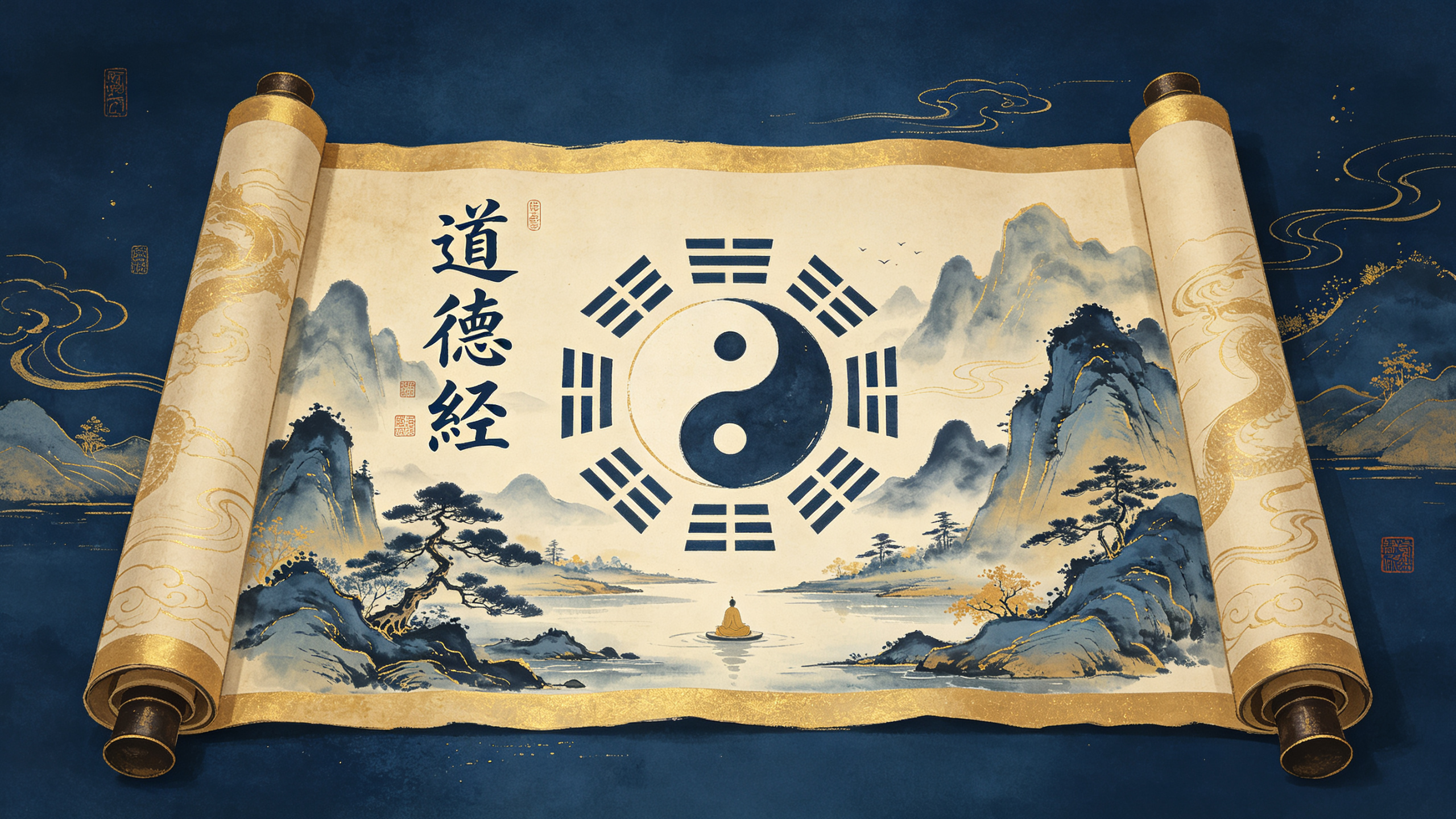
Have you ever felt that the harder you pursue something, the further it seems from your grasp? Have you marveled at the world’s contradictions—how we desire peace yet often end up in conflict? Twenty-five hundred years ago, a wise man named Lao Tzu wrote the Tao Te Ching, a mere 5,000 characters that holds the ultimate code for solving life’s dilemmas.
Many people think the Tao Te Ching is an esoteric ancient text reserved for spiritual practitioners. In reality, it contains the most practical philosophy for living—wisdom every modern person can apply to navigate careers, relationships, and inner anxiety. It doesn’t teach withdrawal from the world; it teaches you how to live gracefully in this chaotic world through smarter approaches.
Today, we set aside metaphysics and religion. Using plain language, we explore the four most practical core concepts from the Tao Te Ching, so you too can experience the pinnacle of Eastern wisdom.
The Tao That Can Be Spoken: Break Language Limits, See True Essence
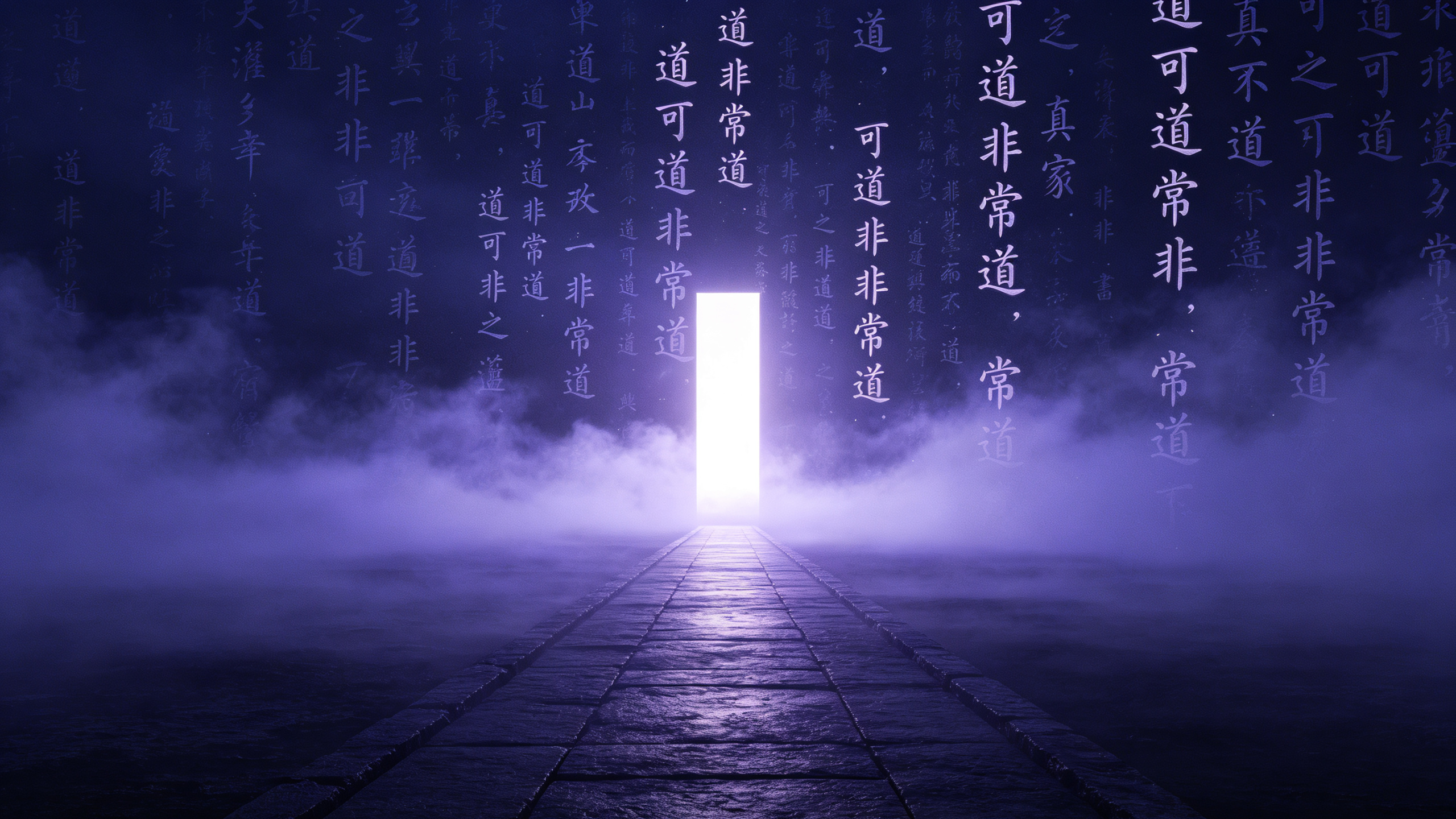
The Tao Te Ching opens with: “The Tao that can be spoken is not the eternal Tao; the name that can be named is not the eternal name.” This sentence has been misunderstood for over two millennia. Many think Lao Tzu means “truth cannot be articulated,” leading them into agnostic confusion. But what he truly means is: Whatever can be described in words is not the eternal truth.
Why is this important? Because modern people’s greatest problem is mistaking “the map” for “the territory.” We use labels, concepts, and theories to understand the world, then forget these are tools, not reality itself.
For example, in the workplace we say “this person is excellent” or “that project was successful.” But what is “excellence”? What is “success”? These are human-created concepts. Once you treat them as absolute standards, you fall into endless comparison and anxiety. You’ll always find someone more “excellent,” some project more “successful.”
Lao Tzu’s wisdom reminds us: language is useful but limited. True wisdom is seeing through the surface of concepts to perceive essence directly. When you’re no longer trapped by various “shoulds,” “musts,” and “standards,” you gain true freedom.
This isn’t about negating everything—it’s about maintaining flexibility. Know the rules without being imprisoned by them. Understand how the game is played without losing yourself. That’s the first layer of the Tao: always remember that truth is broader than language.
The Highest Good is Like Water: Learn Water’s Softness, Become Truly Strong

“The highest good is like water. Water benefits all things and does not compete. It dwells in places people disdain, thus it is close to the Tao.” This is the Tao Te Ching’s most famous line—and the most misunderstood. Many think Lao Tzu teaches weakness, retreat, and being a doormat. Nothing could be further from the truth.
Water appears soft, yet it’s the world’s most powerful force. It can drip through hard stone, erode the sturdiest dams. Water’s power never comes from confrontation, but from “not competing.”
What is “not competing”? It’s not abandoning competition—it’s not competing with others on the same dimension.
Water always flows downward, to places everyone dislikes. Yet precisely because it willingly occupies the lowest position, it gathers all streams and becomes the ocean. As Lao Tzu says: “The reason rivers and seas can rule hundreds of valleys is their skill in staying below them.”
Modern society teaches us to “compete”: compete for first place, resources, recognition. But the more you compete, the easier you fall into zero-sum games. Two salespeople fighting over the same client, two departments fighting over the same budget—often both lose.
Water’s wisdom: instead of fighting others for the same cake, why not carve a new river? Instead of proving yourself in others’ rules, why not create your own game?
Truly strong people never win by how many battles they fight—they win by how many people want them to succeed. When you’re like water, willing to help others succeed, willing to occupy humble positions, you eventually become the leader everyone looks to. That is the power of softness.
Reversal is the Tao’s Movement: Adversity is Growth’s Best Fertilizer

“Reversal is the Tao’s movement; weakness is the Tao’s application.” This is the Tao Te Ching’s core and Eastern philosophy’s deepest insight. It tells us: All things move toward their opposite.
What does this mean? When something reaches its extreme, it inevitably begins to reverse. The brightest day marks the start of sunset; the fullest moon begins to wane. Similarly, when someone is most successful, crisis often begins; when someone hits rock bottom, rebound is near.
Why is this so important? Because it completely transforms how you view adversity.
Most people’s first reaction to setbacks is complaint, escape, wanting to quickly escape pain. But Lao Tzu tells you this is the Tao in operation. Pain is not punishment—it’s the beginning of transformation. What seems worst now may be precisely what pushes you toward a better version of yourself.
Think about it: didn’t your greatest growth come from your hardest times? Unemployment led you to discover new career directions. Breakups taught you what you truly want. Failure taught lessons success never could.
“Reversal is the Tao’s movement” has an even deeper meaning: To gain something, start from its opposite. To become strong, first learn softness. To receive, first learn giving. To rise, first learn descending.
This isn’t positive thinking—it’s how the universe works. Just as seeds must first be buried in dark soil before sprouting, you must go through low points before reaching true heights. So next time you face adversity, don’t rush to escape. Tell yourself: the Tao is moving. Turning point is near.
Wu Wei: Let Go of Control, Gain Greater Power
“Wu wei (non-action) yet nothing is left undone” is probably the Tao Te Ching’s most misunderstood phrase. Almost everyone thinks Lao Tzu teaches doing nothing, just lying flat. This is an enormous misunderstanding.
“Wu wei” doesn’t mean doing nothing—it means not forcing things, not acting against the natural order.
Think about growing a flower. You can water it, give it sunlight, provide proper fertilizer. But you can’t pull it from the soil to check its roots, can’t force it to bloom tomorrow. Doing so only kills the plant.
That’s the true meaning of wu wei: you can create conditions, but you can’t force outcomes. You can strive, but you can’t cling.
Modern anxiety overwhelmingly comes from wanting to control everything. We want to control employee performance, partner behavior, project progress, even how others perceive us. But the more control we seek, the more things spiral out of control.
Wu wei teaches us: distinguish what you can control from what you cannot. For what you can control, give your all. For what you cannot, accept gracefully.
When you let go of the need to control, something magical happens. You no longer rage at employee mistakes—you understand growth takes time. You no longer anxiety over partner imperfections—you know relationships need space. You no longer break down when results differ from expectations—you know to do your best and trust the process.
Then you’ll find everything flows more smoothly. Because you’re no longer fighting against the natural order, but moving with the Tao’s direction. That is “wu wei yet nothing is left undone”: when you force nothing, you can accomplish everything.
The Tao Te Ching’s wisdom ultimately boils down to this: Learn to cooperate with the world’s laws, not fight against them.
It doesn’t ask you to become weak—it asks you to become wise. It doesn’t ask you to abandon ambition—it asks you to pursue it more intelligently. When you understand how the Tao operates, you stop fighting yourself, stop fighting others, stop fighting the world.
Twenty-five hundred years have passed, yet Lao Tzu’s words remain fresh. Because human nature never changes, and the world’s operating principles never change. May we all learn Lao Tzu’s wisdom, living gracefully, clearly, and freely in these chaotic times.
If you enjoyed this article, please share it with friends. Next time we’ll explore more practical wisdom from the Tao Te Ching. Stay tuned.
This article is a popular interpretation of Eastern philosophical thought and does not constitute professional advice.
Comments