
Are you staring at your phone right now, watching those red and green numbers, your heartbeat syncing with every tick?
Have you ever considered a question — one that should send chills down your spine:
When your stock account shows 10,000 more today, where did that 10,000 come from?
Every dollar you earn — every single one — was pulled cent by cent from someone else’s pocket. That person losing money might be using the same phone as you, at the same moment, also convinced they’re the smarter one.
“Buy low, sell high” — these four words are so simple they sound like nonsense. Even the old men playing chess in the park would tell you that. But here’s the truth:
The instant you press that red ‘Buy’ button, someone on the other end of the screen, in nearly the same millisecond, presses ‘Sell.’
You think you’re trading a stock, a ticker symbol? No — you’re making a bet against them — betting your judgment about the future is more accurate, that your information is more complete, that you control greed and fear better.
On a battlefield where information, capital, and even reputation are layers deep in advantage — why would you be the winner?
1 | Market Profits Can Only Come from Three Pockets
Today I won’t bore you with theories or peddle that “good mindset = profits” chicken soup. Let’s fly above this massive casino and tear away the veil completely.
Profits in the market can only come from three pockets. And over 90% of people pick the wrong pocket from step one — they don’t even know they’re the ones delivering money.
2 | The First Pocket: Value Creation — Slowest but Most Solid
This is the cleanest, most solid, and slowest money — so slow it’ll make you question your life choices.
Imagine you’re not trading stocks but running a noodle shop downstairs. Last year, with your secret recipe and early mornings, you netted 100K. This year, with improved flavors and food delivery, business boomed and you netted 200K. Did you steal that extra 100K from someone’s pocket?
No. You created new value through better service. Customers paid willingly for what they deserved.
Scale that noodle shop up 10,000x and it’s a public company. Last year it earned 100 million, this year 200 million — that extra 100 million is incremental wealth created for society. As a small shareholder, you rightfully share in that growth.
To earn this kind of money, you don’t need to know any technical gurus, don’t need to decipher fancy candlestick charts, don’t need to guess tomorrow’s weather. It depends on one thing — whether this company is truly a machine that keeps printing profits.
Take Novo Nordisk, the insulin and weight-loss drug maker. Ten years ago, if you said you owned their stock, people might have looked at you sympathetically — a boring “geriatric disease stock” with zero imagination.
But over a decade, they quietly sold medicine worldwide like a farmer tending crops. Then suddenly they grew a golden seed — the miracle weight-loss drug semaglutide. Every overweight person worldwide went crazy for it, and profits didn’t just climb — they exploded.
Those who held the stock for a decade because they understood the simple logic of “this company solves real human problems” — their money came from the expansion of company value. How solid is this money? Solid enough that you could close your app, go traveling, go fishing, and come back years later to find the snowball had rolled itself.
But here’s the problem:
| Question | Cruel Reality |
|---|---|
| Out of 1,000 listed companies, how many are like this? | Less than 5% |
| Even if you find one, it might be lukewarm for a decade | Do you have the patience to wait for an uncertain value explosion? |
| When friends are all chasing trends — metaverse today, AI tomorrow — making money hand over fist | Would holding your slow-growth stock make you feel like a fool? |
Given two choices:
- A: Hold a boring 15% annualized slow-growth stock for 10 years
- B: Chase trends that might double or halve
Your first instinct is still B, isn’t it? Human nature always favors shortcuts. So the vast majority flood into the second pocket.
3 | The Second Pocket: Sentiment Arbitrage — Fastest and Most Dangerous
This is the fastest-moving and most dangerous money. It’s not value creation — it’s trading human nature.
The thing is the same thing, the company is the same company, but its price swings like a roller coaster driven by people’s greed and fear.
“Be greedy when others are fearful, fearful when others are greedy” — you’ve heard this, maybe even made it your motto. But there’s a fatal trap hidden inside: what makes you certain the “others” being called fools isn’t you?
Flash back to March 2020. COVID swept the globe like a tsunami. Markets crashed in freefall. Every day your account was shrinking — that feeling was like death by a thousand cuts.
Two datasets:
First — During those most panicked two weeks, a hedge fund called Citadel went against the tide, aggressively buying airline stocks, hotel stocks, cruise stocks. These were what everyone considered “bankruptcy candidates.”
Second — That same two weeks, global retail investors set records for net selling these same stocks. Their reasoning was simple and unanimous: “The world is ending. These companies will definitely go bankrupt.”
What happened three months later? As central banks worldwide flooded markets with liquidity, these exact stocks — the ones retail investors treated as garbage — violently rebounded 60%, 70%, or more.
Textbook bottom-fishing. What institutions greedily bought with real money was exactly the bloody chips that countless ordinary people like you and me fearfully cut with our own hands.
In this pocket, earning money is fundamentally:
A game. Playing against the human weaknesses of the vast majority. Your opponent isn’t some mysterious market maker — it’s your neighbor, friends in your social feed, the masses of disorganized, emotion-driven people.
This pocket’s money is incredibly tempting because it’s fast — buy today, it might hit the daily limit tomorrow. But it’s also incredibly bloody — every cent you earn comes from someone else’s fear and regret, and every cent you lose feeds someone else’s greed and composure.
This is a massive human slaughterhouse, and most people walk in carrying a knife, only to sacrifice themselves.
4 | The Third Pocket: Risk Compensation — Most Hidden and Professional
The third pocket is the most hidden and most professional. It’s called risk compensation — simply put, you’re willing to bear risks others won’t, and the market pays you a fee for the trouble.
An insurance company’s business is exactly this logic. You pay a few thousand annually for car insurance because you fear a major accident costing hundreds of thousands. You’re paying to transfer the “low-probability, high-impact” risk to the insurer.
The insurer collects premiums from 10,000 of you, steady and calm — as long as no catastrophic disaster hits, total payouts are always less than total premiums. They earn the compensation for bearing your risk.
In investing, the same logic applies.
In 2016, global shipping entered a deep freeze. South Korea’s largest shipping company Hanjin suddenly declared bankruptcy. The domino effect began — the entire industry panicked, and all shipping company bonds started plummeting. One company’s bonds were selling at just 30% of face value — 100 dollars of bonds for just 30.
Why? The market thought it would be the next Hanjin, ready to die at any moment.
That’s when a junk-bond fund stepped in. They didn’t try to predict when shipping would recover — they did something tedious:
They sent people to ports worldwide, counting ships one by one, assessing each vessel’s value and each route’s worth. They calculated: even if this company went bankrupt and liquidated right now, selling all ships would yield assets worth 50% of bond face value.
What does that mean? Buy at 30, and even in the worst case — bankruptcy — you get back 50. This is a guaranteed profitable trade; the only question is how much you profit.
If the company survived, they’d get the full 100 plus high interest.
This is earning risk compensation money. You’re not profiting from “correctly predicting the company’s resurrection.” You’re profiting because everyone’s excessive panic priced risk incorrectly, and through professional research you discovered this mispricing and dared to bet on it.

5 | The Cruelest Reality: You Think You’re Aiming for Pocket 1 or 3, but You Haven’t Even Found Pocket 2’s Door
Three pockets, seemingly all roads lead to Rome: value investing shares growth, sentiment arbitrage buys low and sells high, risk compensation calculates precisely.
But the cruelest reality is:
The vast majority of ordinary people think they’re aiming for pocket 1 (“I’m doing value investing”) or pocket 3 (“I’m going for high-risk, high-reward”). But actually, they haven’t even found the door to pocket 2 (sentiment arbitrage). They don’t even realize they’re sitting at the wrong table.
There’s an unwritten iron rule in the financial world — from an old poker saying:
“If the game’s been going 10 minutes and you haven’t figured out who’s the weakest player at the table — you’re probably it.”
6 | GameStop 2021: The Real Winners Behind the Retail “Revolution”
Remember the 2021 GameStop saga — that epic battle of retail investors vs. Wall Street?
A group of self-proclaimed “retail warriors” rallied on Reddit forums, forcing a near-delisted, heavily shorted junk stock from around $10 to over $400. Media portrayed it as “ants toppling elephants,” a revolution. Countless people wept with emotion, feeling they’d witnessed history.
But when the dust settled, cold data ripped apart that fairy tale’s underwear.
During the craziest, highest-volume days, the ones earning astronomical profits — beyond the few earliest leaders — were high-frequency trading firms and market makers, like Citadel and Virtu.
Did they care about GameStop’s future? About retail investors’ justice?
No. They cared about nothing. They didn’t care whether the stock went up or down — they only cared about one thing: is there a spread?
As thousands of retail investors flooded in, frantically placing buy orders, these HFT firms skimmed between buy and sell orders at millisecond or even microsecond speed.
Your buy order is $400.10, their sell order is $400.08 — they swallow that $0.02 spread at nanosecond speed.
Two cents per trade seems negligible, but with astronomical volume — tens of millions or even hundreds of millions of shares daily.
The grand retail uprising ended, leaving carnage. Meanwhile, these market makers’ quarterly profits hit all-time highs.
You thought you were investing, fighting, making history — but to the real professional players, every emotionally charged buy or sell click you made, your self-righteous sense of justice, was itself their source of profit.
This isn’t conspiracy theory — it’s publicly documented business logic.
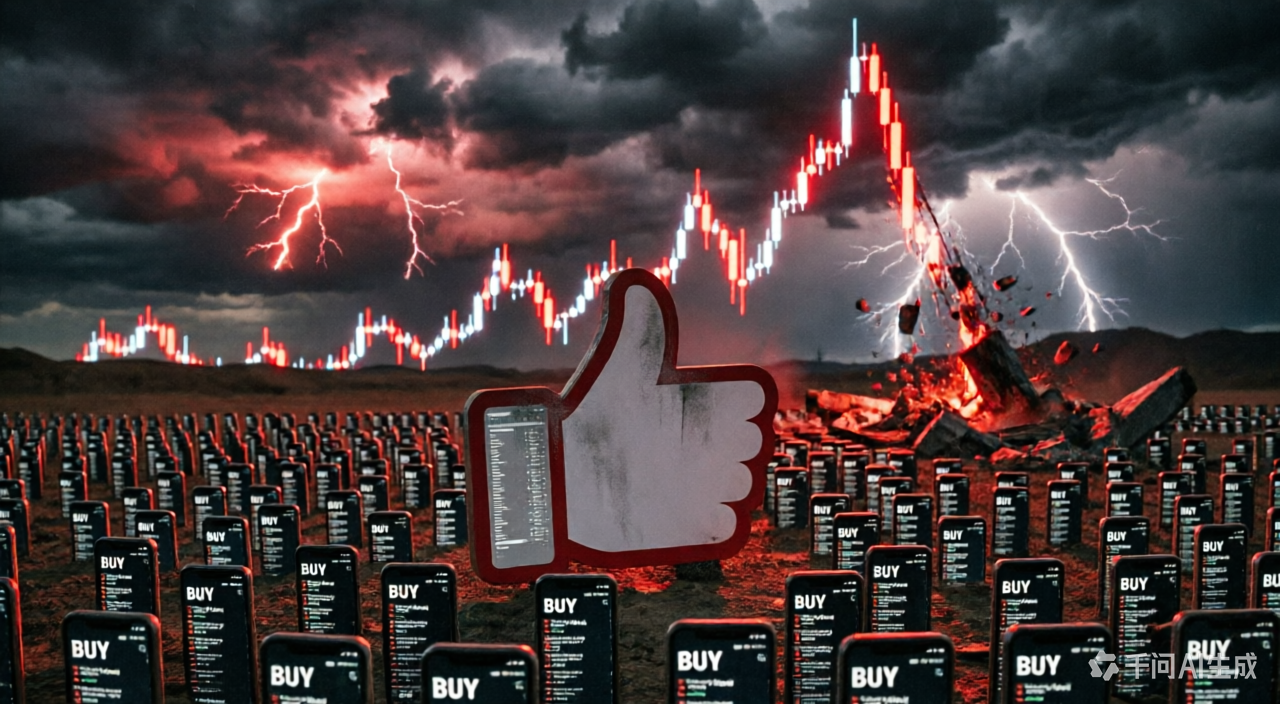
In the US there’s something called Payment for Order Flow (PFOF) — why are those zero-commission trading apps free? Because they package and sell your orders to HFT firms like Citadel.
In 2022 alone, this business generated over $3 billion in profit for market makers. Where did this money come from? From every bit of “free trading friction” you thought you were getting.
You think you’re using an app to trade for free. In reality, your trading behavior is the product being sold.
7 | Information Gap: Your News Feed Is Other People’s Leftover Bones
The information gap is even more staggering.
When you see a “Company X Beats Expectations” headline on a financial app, what do you feel? Excitement — buy now!
But what you don’t know is that top investment institutions spend tens of millions of dollars annually on commercial satellite imagery to count Walmart parking lot traffic to predict quarterly revenue. They track global credit card spending data to gauge consumer trends. They monitor global supply chain logistics, knowing next quarter’s raw material costs before the CEO does.
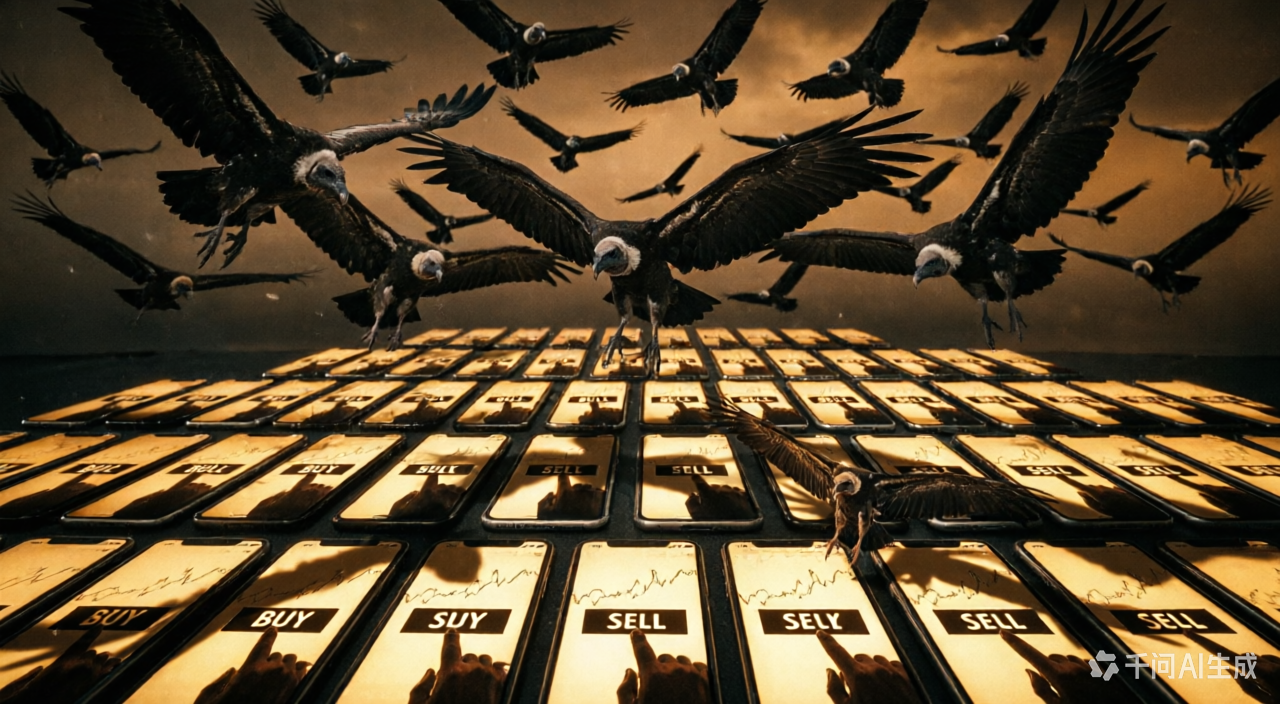
By the time that headline pushes to your phone, institutions with their “information radar” likely positioned themselves hours or even days ago. The price you rush in at after seeing the news is the price of someone who’s already eaten the prime rib and is picking their teeth on the way out.
Information asymmetry, speed asymmetry, capital asymmetry — on this battlefield, an ordinary retail investor using news, gut feelings, trend-guessing, and frequent trading is going head-to-head with these top-tier special forces armed to the teeth.
The outcome was determined the moment you opened your trading account.
8 | The Retail Investor’s Ace: Time — But You’re Throwing It Away
Feeling hopeless? Like regular people are just lambs for slaughter?
Absolutely not. Every ordinary retail investor actually holds one ace card — one that makes every fund manager drool with envy.
The irony? Most retail investors are actively tossing this ace card in the trash.
This ace card is time.
I don’t mean the cliche “hold long-term.” I mean a structural asymmetric advantage — you have no short-term performance review pressure.

Imagine a top global fund manager — let’s call him Manager Zhang. He manages trillions, backed by countless clients watching his performance. Every quarter he must turn in his report card — two consecutive quarters underperforming the benchmark, clients start redeeming, his bonus evaporates; four consecutive underperforming quarters and he might be packing his desk.
Even if Manager Zhang is 100% certain a stock will 5x in three years, but in the next two quarters it might drop 30% due to industry adjustment — would he dare go all-in?
He wouldn’t. Absolutely wouldn’t. Because he can’t wait, his clients can’t wait, his boss can’t wait, and his career can’t wait. His game rules don’t allow short-term massive drawdowns, even temporary ones.
That’s your opportunity.
2008 financial crisis. Harvard’s endowment fund — rich as a nation, right? But the crisis created such severe cash flow strain that they were forced to sell extremely high-quality private equity assets at less than 50 cents on the dollar.
Did they want to sell? No. But they had no choice — they needed cash, they couldn’t wait.
Who picked up those bloody but precious chips? Not bigger institutions, but quiet family offices and far-sighted individual investors. They had no quarterly review pressure. Their money could wait. Five years later, those assets not only fully recovered but some had 3-5x’d.
They earned “I can wait, and you can’t” money. They profited from professional institutions’ “time anxiety.”
Our greatest advantage as ordinary retail investors is precisely the freedom to not be forced to sell at the worst possible moment. When all the professionals are forced to collectively cut losses at the market’s most panicked, cheapest point — due to client redemptions, risk limits — you can sit there quietly, even leisurely picking up the gold they’re throwing on the ground with spare cash.
This itself is an asymmetric advantage.
Yet how many people actively trade away this edge for a disadvantage? How? Two words: frequent trading.
Professors at National Taiwan University conducted a 15-year study tracking tens of thousands of retail trader records. The results were heartbreaking:
The most active 20% of traders had annualized returns averaging 6 full percentage points lower than those who bought index funds and simply “lay flat.”
6 percentage points — what does that mean? With NT$1 million in capital, these most diligent traders earn NT$60K less per year than the “laziest” investors.
Not because they picked bad stocks, but because every trade you think is brilliant costs commissions, stamp taxes, and friction. More importantly — every trade means voluntarily surrendering your time advantage, jumping into the meat grinder of HFT and information asymmetry to sprint 100 meters against professional sprinters.
You’re an amateur marathon runner who’s turned a marathon that should be yours into an endless series of 100-meter dashes you’re guaranteed to lose.

9 | Expected Value Thinking: Abandon Prediction, Embrace Odds
Think one layer deeper and you’ll hit an even more fundamental, uncomfortable truth —
Most of us massively overestimate our own judgment.
We always think investing profits come from brilliant predictions — forecasting which sector rises tomorrow, which stock becomes the next big thing. But look at those who’ve actually built massive wealth through investing — Buffett, Soros, Howard Marks — and you’ll find a counterintuitive commonality:
They almost never make precise predictions.
Howard Marks, founder of Oaktree Capital, manages nearly $200 billion. He once said something the investment world considers scripture:
“We never try to predict the future. We only assess whether the odds of our current bet are good enough.”
This reveals investing’s most foundational mental model — expected value thinking.
What does it mean? Don’t worry — it’s not complicated. You don’t need to know something will definitely happen. You only need to assess three things:
- If it happens (you’re right), how much do you earn?
- If it doesn’t happen (you’re wrong), how much do you lose?
- What’s the approximate probability it happens?
Then do elementary-school arithmetic:
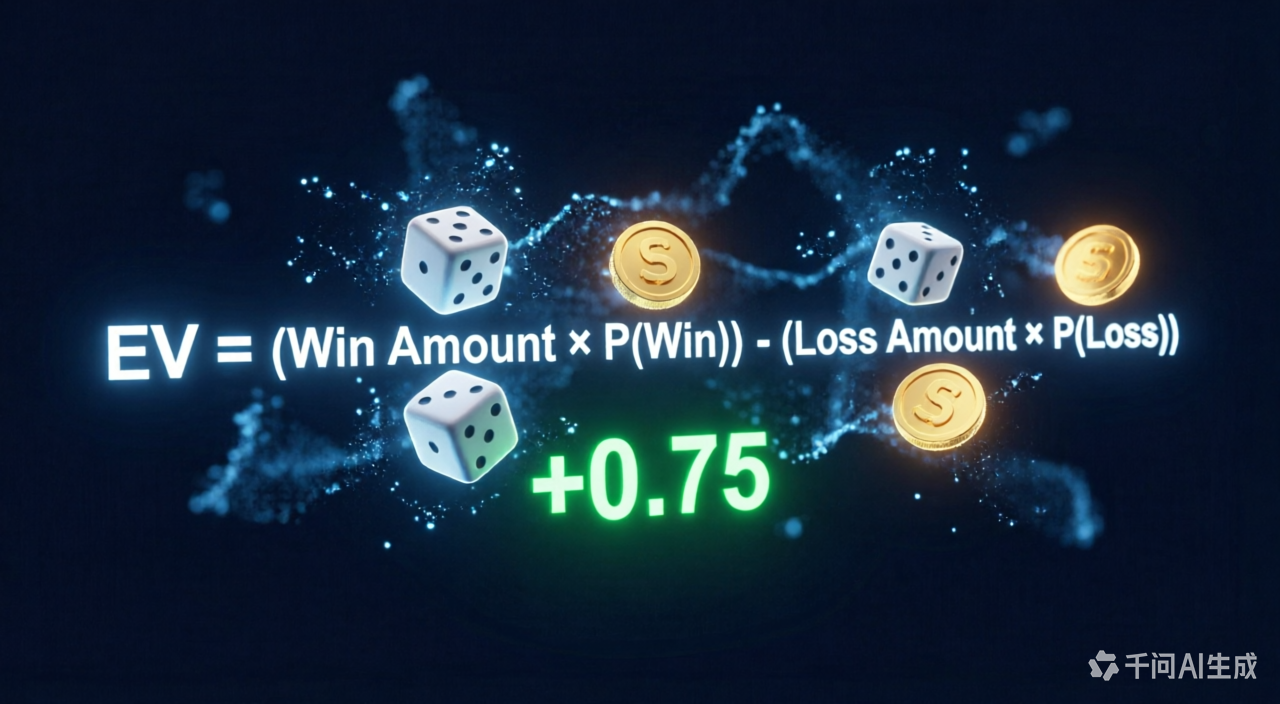
Expected value = Profit × Probability of occurring − Loss × Probability of failing
As long as the result is positive, even if the event’s probability isn’t high, the bet is worth taking — because long-term, it makes you money.
Example: Before the 2016 Brexit vote, mainstream global media and experts all believed the UK wouldn’t leave the EU. But some sharp hedge funds noticed the betting odds for Leave were 1:4 — meaning bet one dollar on Leave, and if you win, you get 5 back. This implied the market thought Leave probability was under 20%.
But these funds’ own analysis and polling suggested the real Leave probability might be as high as 35%. Do the math:
Expected value = Win 4 × 35% − Lose 1 × 65% = 1.4 − 0.65 = 0.75 (positive)
So they quietly placed their bets. The UK actually left, global markets convulsed, and they profited massively.
But the critical point: even if the UK hadn’t left, mathematically this bet was still the correct decision. They were earning the money from probability mispricing, not from prediction accuracy.
This leads to expected value thinking’s most important companion — position sizing.
Never put all your hopes and capital on one or two bets you think are “genius calls.” True masters find many expected-value-positive opportunities like the Brexit bet, then use only a small portion of capital for each. Individual bets might lose, even consecutively. But with enough repetitions, the law of large numbers puts mathematics on your side, guaranteeing you’re the ultimate winner.
Investing masters are never prophets who can divine the future. They’re cool, shrewd probability gamblers — cold-blooded, ruthless risk calculators. They don’t chase winning every round. They only ensure that over the long game, the total ledger is always positive.
10 | Three-Step Summary: Your Investment Operating System
Let’s return to the original question: how does investing actually make money?
Step 1: Clearly Identify Which Pocket Your Target Money Comes From
Is it sharing in corporate growth (value creation)? Gaming market sentiment (sentiment arbitrage)? Compensating for unknown risks (risk compensation)? Pick the wrong battlefield and all your effort is delivering money to someone else.
Step 2: Fully Leverage Your Unique “Time Freedom” Ace Card
Don’t use your hobby to challenge professionals whose livelihood depends on millisecond-level reflexes — use your “slow” to counter their “fast.”
Step 3: Abandon the Childish Fantasy of Perfect Prediction, Embrace Expected Value’s Scientific Thinking
Transform from “this time I must be right” gambler into “long-term I’ll most likely win” operator.
11 | The Deepest Truth: Investing Is a Lifelong Fight Against Human Nature
But finally, beneath everything — the most fundamental layer: investing logic and life’s money-making logic are strikingly similar.
You can never sustainably hold wealth beyond your cognitive capacity. The market is like a brutally honest magnifying glass — it doesn’t magnify your capital, it magnifies your cognitive structure, your character weaknesses, your deepest hidden desires and fears.
- You’re fearful? It grinds at the bottom, shaking you out right before dawn
- You’re greedy? It creates mania at the top, luring you to catch the last falling knife
- You think you’re rational? It uses consecutive gains to shatter your conviction, making you throw your value investing books in the trash
Investing, on the surface, looks like a financial game about money. But at its core, it’s a lifelong battle each of us wages against our own human nature.
How honest are you about your own weaknesses? Can you stay silent and think independently when everyone’s celebrating? Can you dare to bet when the market is dead silent and everyone’s avoiding it? No textbook has standard answers for these questions.
The answer lies only in that instinctive impulse to buy or sell that rises in your heart every time you face account fluctuations — conquer it and you might become the one taking money from others’ pockets; let it conquer you and you become the one silently paying for others’ cognition and composure.
The market was never hard. What’s hard is seeing clearly the person in the mirror.
This article contains securities investment perspectives and case analysis, intended solely for market structure cognition. It does not constitute specific investment advice. Past cases do not represent future performance. Markets carry risk — invest cautiously and make independent judgments based on your own risk tolerance.
Comments