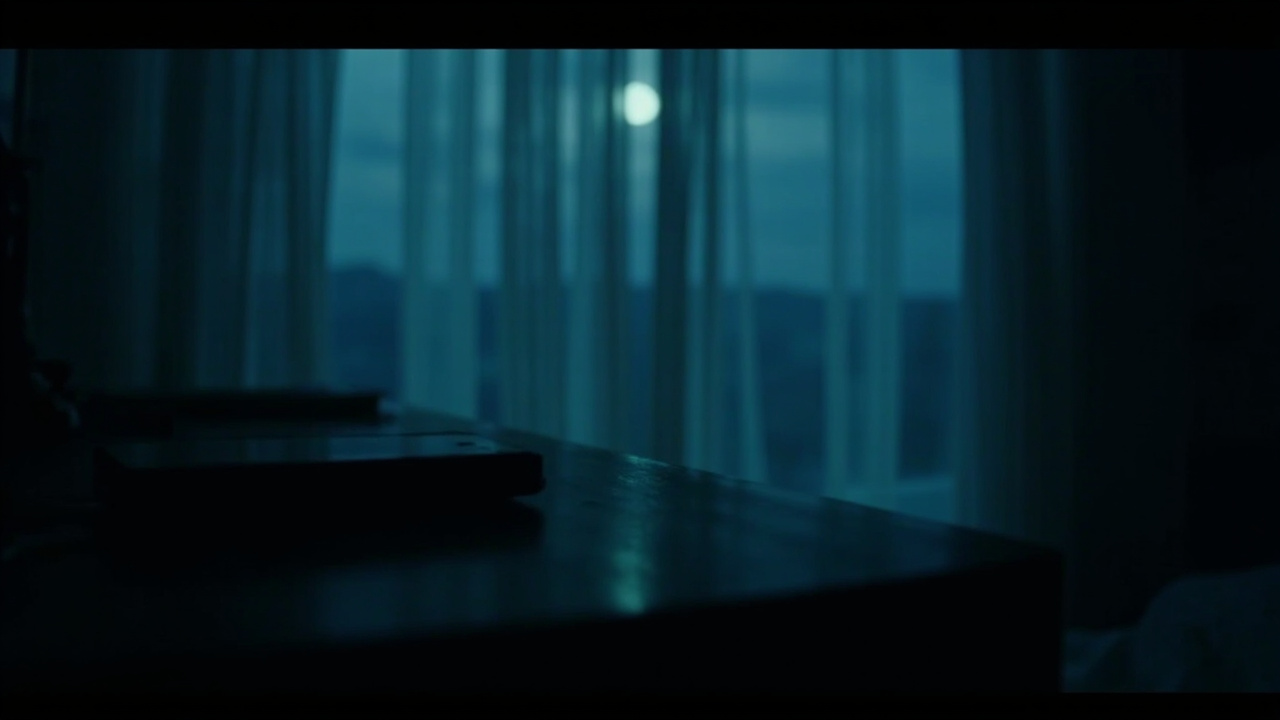
Have you ever had this moment: 1 AM, your phone screen glowing, your account deep in the red — not just a little, but the kind that gets worse the longer you wait. You averaged down, told yourself to hold, and it only kept falling.
You start doubting: did I buy too early? Did I fail to be patient? Did I lack information? Am I just not smart enough? Then you glance at the balance, then at your age — 30, 32, 35 — and a quiet fear settles in: if I can’t get money right now, what about later?
Worse, you’ve been working hard: K-line charts, financial reports, news feeds, expert podcasts. Winning feels like picking up free money, losing feels like a leak. A year passes, and your account has quietly shrunk 30%, 50%, or more.
You think the problem is your investing. But more likely, you’ve been blind to what’s really eating your future. In the 2026 workplace reset, you’re trading your most valuable asset for the cheapest thing in the market — and you don’t even realize it.
The conclusion first: it’s not that you lack effort or intelligence. You’re playing the wrong game with the wrong chips. Let’s peel it apart layer by layer.
Layer One — The Rules: You’re Gambling Against the Time Monster
You think investing is about picking the right stocks. In reality, it’s about who survives the longest and burns the steadiest.
Here’s a number: if your account drops 50% in a year, you need a 100% gain to break even. If it drops 70%, you need a 233% gain. Sounds absurd, but that’s math, not emotion. The cruelest thing about markets is that they let you lose fast but make recovery almost impossible.
Another fact: an ordinary person only has 3 to 4 hours of effective decision-making time per day. Past that, the brain fatigues and judgment drops. The market? It runs 24/7, with information overload and emotional volatility.
Who’s your opponent? Algorithmic trading desks. 24-hour shift teams. Systems that execute 0.001 seconds faster than you. It’s like bringing a kitchen knife to a mining-excavator contest — you don’t lose on effort. You lose on the rules.
Layer Two — The Psychology: You’re Not Investing, You’re Being Engineered
Have you noticed? You’re always afraid to buy when it’s going up, and you can’t bear to sell when it’s going down. This isn’t a personal flaw. It’s the brain’s default setting.
In psychology, it’s called loss aversion: the pain of losing NT$1,000 is roughly twice as intense as the pleasure of gaining NT$1,000. So you hold losers with conviction and sell winners at the first twitch.
And the market’s favorite move is to exploit exactly this weakness. In 2008, for example, many stocks staged a fake rebound right before the real crash. Why? Not out of kindness. To make you think: “Is the selling over? Should I bottom-fish now?” You step in, and the slide continues. That’s called a shakeout.
Another sobering data point: statistics show that more than 80% of retail investors underperform the index over the long term. Not by a little — by a lot. Why? Because they make decisions at the moment emotions are loudest: panic-selling into fear, FOMO-buying into greed. And what are institutions doing? The exact opposite.
So you think you’re trading. In reality, your emotions are trading for you.
Layer Three — The Deep Logic: The Real Asset Isn’t Money, It’s You
Let’s go deeper. Why do some people recover from losses while others sink deeper? The answer is something most people overlook: human capital. In plain terms, your future ability to earn.
Picture this: your account is down NT$200,000. If you can still earn NT$300,000 a year reliably, that loss is just a fluctuation. But if your income is stagnant or falling, that same loss becomes a serious blow.
It’s like the sand-pile experiment: grain by grain, the pile looks stable — until a single small grain triggers a full collapse. Career-wise, the same is true: past 35, your risk resilience isn’t about how much you have saved, it’s about whether you can still create value.
The trend in 2026 is unmistakable: AI is replacing repetitive labor; companies are pruning replaceable people. Who remains? Not the hardest workers. Not the most exhausted. The hardest to replace.
That’s why I said you’ve been trading your most valuable asset for the cheapest thing in the market: you spend your time, attention, and energy on high-frequency, short-term speculation — and in return, you don’t grow the money, and you don’t grow yourself. That’s the most expensive cost of all.
The Only Way: Demote Investing from a Career to a Tool
So what do you do? Is there a path ordinary people can actually walk? Yes. And it’s boring. You could even say it’s counter-human.
The only answer: stop using money to make money, and start using yourself to make money. The core idea is one sentence — demote investing from a career to a tool. You don’t escape your situation by trading. You escape it by building capability. Investing just keeps you from being left behind.
Method 1: Build a Core + Satellite Portfolio
Simple. Put 80% of your capital in a long-term index fund — a broad-market ETF — and don’t fiddle with it. Use the remaining 20–30% as a “satellite” allocation to learn, make mistakes, and even take small speculative bets. That way you stay engaged with the market without letting it destroy you.
Method 2: Let Your Age Set Your Risk
A simple formula: 100 minus your age equals the percentage of risk assets you can tolerate. If you’re 35, at most 65% in volatile assets; the rest in steadier holdings. It’s not absolute, but it’s 100 times better than going all-in.
Method 3: Do a Human Capital Checkup Every Year
Ask yourself three questions:
- Will the skills I have today still be worth money three years from now?
- Am I continuously learning new capabilities?
- If my company laid me off tomorrow, do I have a second path?
If the answers make you uncomfortable, that’s a good sign — it means you’ve finally seen the problem.
Closing: You Think You’re Playing the Market, But You’re Playing Against Time
You think you need a comeback rally. What you really need is a system that lets you survive. Money can be lost and made again. But if you lose the ability to make money, that’s true zero.
Open your brokerage account right now. Don’t look at the P&L. Ask yourself three questions:
- If I couldn’t trade tomorrow, would I still want to hold these assets?
- If they fell another 30%, could I take it?
- If I closed everything out today, would my life get better or just more anxious?
If you can’t answer, that’s not a market problem — it’s time to redesign your life’s asset allocation.
Disclaimer: This article is for educational and informational purposes only and does not constitute investment advice. Investing involves risk, and past performance does not guarantee future returns. Please assess your own risk tolerance carefully before making any decisions.
Image Generation Prompts
Image 1: Midnight Account in the Red
- Placement: Article opening hero banner
- Emotional Anchor: Anxiety, late night, suppression
- Color Tone: Deep red and dark blue, evoking loss and isolation
- Prompt (Midjourney v6):
Abstract conceptual still life: a single dark smartphone lying on a wooden bedside table, soft blue moonlight streaming through sheer curtains in the background, the room is quiet and shadowy, cinematic low-light composition, somber reflective mood, no human figures, no readable text --ar 16:9 --v 6 - Prompt (DALL-E 3):
16:9 abstract cinematic still life: a single dark smartphone lying on a wooden bedside table, soft blue moonlight streaming through sheer curtains in the background, the room is quiet and shadowy, somber reflective mood, no human figures, no readable text, no faces.
Image 2: Knife vs Mining Excavator
- Placement: End of layer one section
- Emotional Anchor: Unequal match, warning
- Color Tone: Cold grey with warning orange
- Prompt (Midjourney v6):
A surreal scene of a tiny rusty knife standing next to a giant yellow industrial mining excavator in a quarry, the knife is dwarfed by the machine's scale, dawn mist in the background, low angle dramatic composition, desaturated greys with industrial yellow accents, no human figures, no text --ar 16:9 --v 6 - Prompt (DALL-E 3):
16:9 surreal scene: a tiny rusty kitchen knife standing next to a giant yellow industrial mining excavator in a quarry, the knife is dwarfed by the machine's scale, dawn mist, low angle dramatic composition, desaturated greys with industrial yellow accents, no human figures, no text.
Image 3: Loss Aversion Cycle
- Placement: End of layer two section
- Emotional Anchor: Psychological manipulation, loop
- Color Tone: Red-green contrast, symbolizing fear and greed
- Prompt (Midjourney v6):
Abstract conceptual illustration of a hamster wheel made of red and green arrows, the wheel is stuck in a downward spiral, a tiny silhouette trapped inside running endlessly, soft fog surrounding the wheel, minimalist style, no text --ar 16:9 --v 6 - Prompt (DALL-E 3):
16:9 abstract conceptual illustration: a hamster wheel made of red and green arrows stuck in a downward spiral, a tiny silhouette trapped inside running endlessly, soft fog surrounding the wheel, minimalist style, no text.
Image 4: Human Capital Visualization
- Placement: End of layer three section
- Emotional Anchor: Awakening, value reassessment
- Color Tone: Warm gold and deep blue, symbolizing growth and depth
- Prompt (Midjourney v6):
Abstract conceptual scene of a glowing golden tree growing from a stack of old dusty coins, the roots spread into a deep blue ocean below, the branches reach upward with bright golden leaves, soft studio lighting, surreal minimalism, no text --ar 16:9 --v 6 - Prompt (DALL-E 3):
16:9 abstract conceptual: a glowing golden tree growing from a stack of old dusty coins, the roots spread into a deep blue ocean below, the branches reach upward with bright golden leaves, soft studio lighting, surreal minimalism, no text.
Image 5: Core Satellite Portfolio Visualization
- Placement: End of Method 1 section
- Emotional Anchor: Balance, steadiness
- Color Tone: Stable blue + adventurous orange
- Prompt (Midjourney v6):
A balanced composition of a large calm blue planet on the left with 80% size and a smaller energetic orange moon orbiting on the right at 20% size, soft gradient space background with subtle starlight, minimalist astrophotography style, no text --ar 16:9 --v 6 - Prompt (DALL-E 3):
16:9 balanced composition: a large calm blue planet on the left taking 80% of the frame, a smaller energetic orange moon orbiting on the right at 20%, soft gradient space background with subtle starlight, minimalist astrophotography style, no text.
Comments